
A travel guide to lodging in Munich, along with a review of the Hotel am Viktualienmarkt.
Located in the heart of Germany’s Bavarian region, Munich is the country’s third-largest city and a symbol of the country’s resilience. After World War II, while other German cities were rebuilt in a modern style, Munich chose a path of restoration, bringing back to life the charm that so many travelers love. Today, visitors are captivated by its splendid museums and palaces, stunning historic churches, and the world-famous Oktoberfest.
Whether visiting Munich to explore its museums or enjoy the lively atmosphere of a beer hall, travelers need to consider the city’s size when choosing the ideal accommodation. With so many options, from 5-star hotels to smaller, family-owned inns, the decision can be overwhelming. That is where this lodging guide comes in. Here, I share insights and tips, including highlights of the best neighborhoods for first-time visitors. I’ll also provide a review of my hotel, Hotel am Viktualienmarkt, a small, family-run hotel.
Munich Lodging Tips
Munich is a large city, with each neighborhood offering its unique charm and characteristics. Some areas place you in the middle of the action, within walking distance to major attractions and among the crowds. Others offer a more relaxed pace and are more residential than touristy. During my five nights in Munich, I stayed in a hotel steps from many of the city’s best attractions, but that central location came with a few trade-offs. In this section, I’ll share notes on the pros and cons of several neighborhoods to help you select the one that best suits your travel style and budget.
Altstadt
Altstadt is Munich’s old town and home to many of the city’s most iconic sites. In the heart of Altstadt is the Marienplatz, a lively town square that is a designated pedestrian-only zone and attracts crowds with its many restaurants, shops, and the famous Glockenspiel. Near Marienplatz are other notable places, including the Residenz Munich, the Viktualienmarkt, and historic churches such as Alter Peter and the Heilig-Geist-Kirche. There are also a handful of old-town breweries and a beer garden.
Altstadt is best for those spending just a day or two in Munich, or for those who prefer not to rely on public transportation. My hotel was in Altstadt, a short walk from the Viktualienmarkt, and I only needed to take public transportation to reach the museums and the theatre. Another plus is the train station at Marienplatz (S-Bahn/U-Bahn hub), which makes it easy to take day trips to nearby cities (I took the train to Dachau from there).
For me, a downside of Altstadt is the crowds, particularly during peak travel seasons. Fortunately, my hotel was on a quiet side street, but I encountered crowds and traffic when I wandered around the neighborhood. Despite being the city center, there is a good mix of lodging in terms of nightly rates. In and around Marienplatz, hotels are pricier, with some luxury accommodations, while toward the outskirts of Altstadt, travelers will find more affordable inns and hotels.
Maxvorstadt
North of Altstadt lies Maxvorstadt, a quieter, more laid-back neighborhood ideal for those with more time in Munich and interested in a more immersive experience of the arts and history. Here, travelers will discover the Kunstareal, an area of the city filled with historic sites, universities, galleries, and museums, including the Alte Pinakothek, the Staatliches Museum Ägyptischer Kunst, and the Glyptothek Munich.
While I didn’t get to spend much time in Maxvorstadt, the parts I saw while visiting the Alte Pinakothek and the Staatliches Museum Ägyptischer Kunst were lovely. This area has a more residential and university-campus vibe, with plenty of open green spaces and fewer crowds. If I ever return to Munich, I would definitely lodge in Maxvorstadt just to be closer to the museums, parks, and gardens!
This neighborhood is less walkable than Altstadt, but it is still easy to get around thanks to Munich’s robust public transit system. From my hotel, I reached the museums by a short tram ride (about 25 minutes with a transfer), so those lodging in Maxvorstadt still have quick, easy access to the city center. As for lodging, nightly rates are more moderate in this area, plus there are a few hostels for those traveling on a tighter budget.
Ludwigsvorstadt-Isarvorstadt
Ludwigsvorstadt-Isarvorstadt is located south of the Altstadt and is known for its multiculturalism, nightlife, and trendy eateries and boutiques. This area is perfect for those who wish to attend Oktoberfest, as Theresienwiese, the fairgrounds where the annual festival is hosted, is nearby. Ludwigsvorstadt-Isarvorstadt may also be a good option for the younger crowd interested in bars and clubs.
I didn’t walk through this neighborhood during my time in Munich, so I cannot share any personal insight. However, I know that the Hauptbahnhof, Munich’s Central Station, is located here, and, as in other parts of Munich, there are plenty of public transportation options. As in Maxvorstadt, lodging rates are on the lower to moderate end, but note that prices do increase during Oktoberfest.
Hotel am Viktualienmarkt
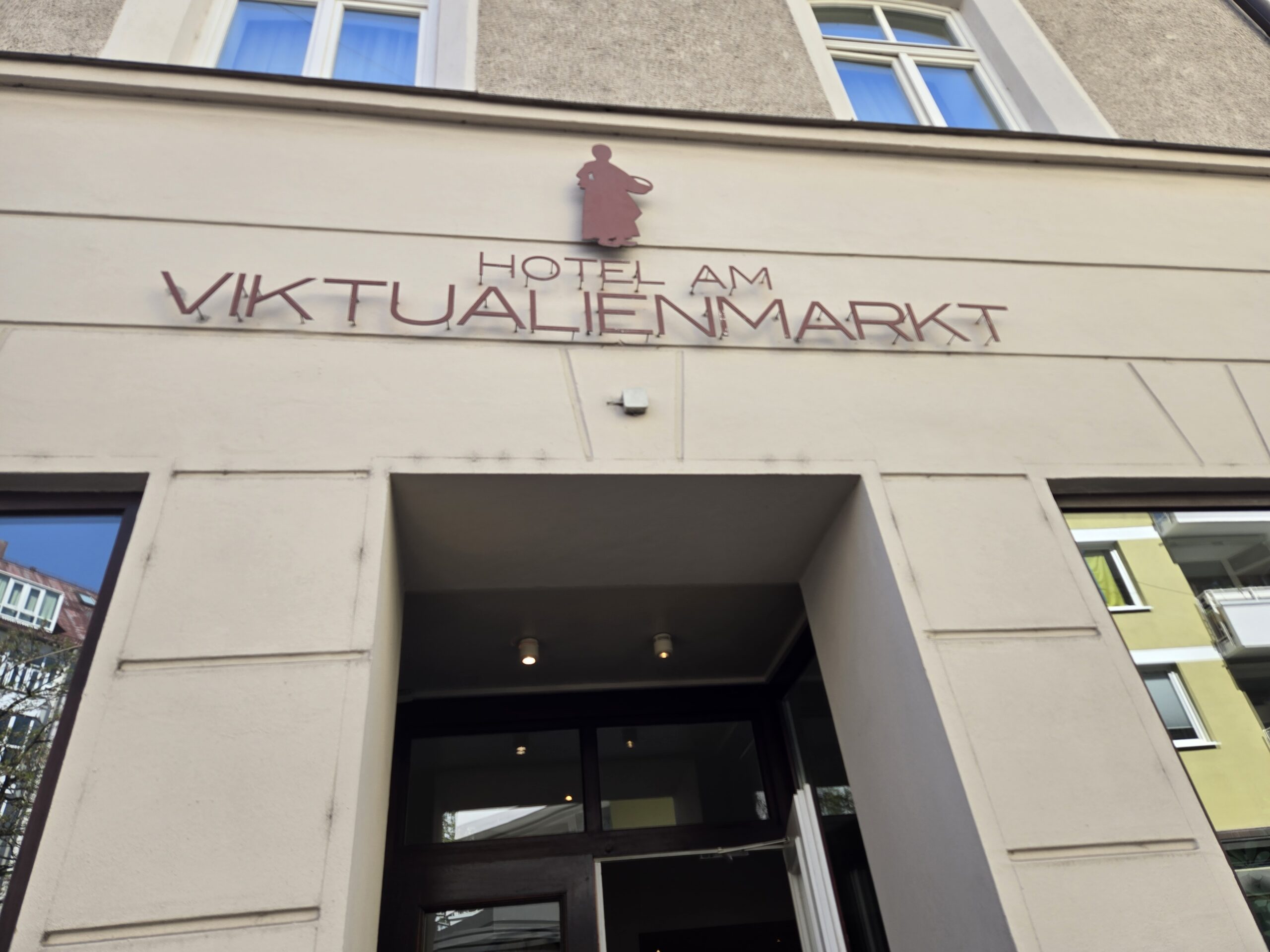
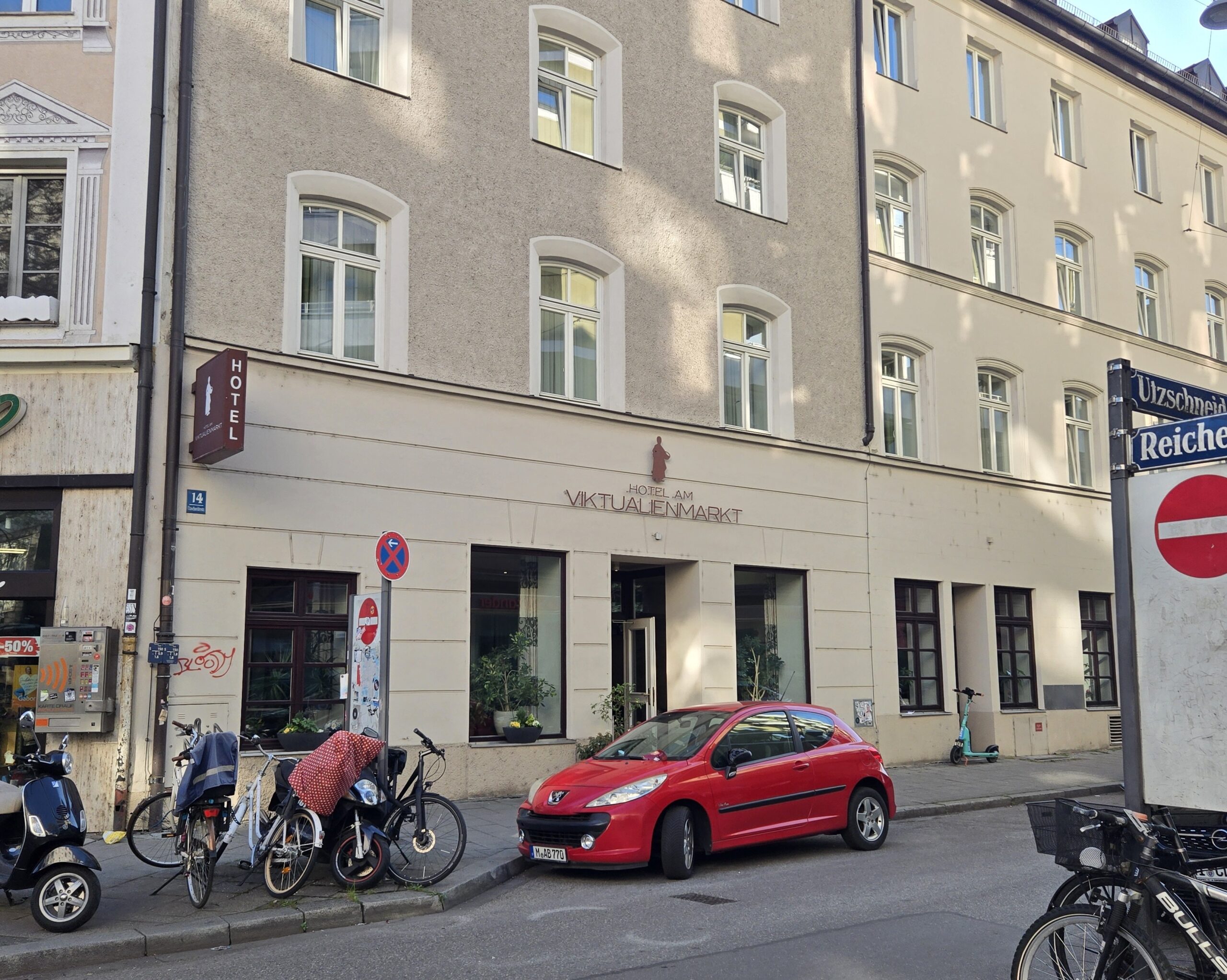
The Hotel am Viktualienmarkt is a small, family-owned hotel located a block from the Viktualienmarkt, hence the name. It is a simple hotel focused on comfort and convenience, not luxury. The Hotel am Viktualienmarkt has 26 rooms, a business center, internet access, and a dining area, where continental breakfast is served. As previously shared, it is ideally located, within walking distance to many attractions and restaurants, and near public transit stops and stations. The hotel is also across the street from a pharmacy, which is handy if you need toiletries or over-the-counter medications (I visited this pharmacy and was able to get stomach medication for a reasonable price).
My Experience at the Hotel am Viktualienmarkt
For my 2025 spring European trip, I participated in the Rick Steves’ Best of Munich, Salzburg, and Vienna tour, so the company selected the hotel. In total, I stayed at the Hotel am Viktualienmarkt for 5 nights, as I arrived in Munich 3 days before the tour started. I admit I was a bit wary after reading some online reviews, but in the end, I had a pleasant stay and do recommend this hotel, especially to travelers looking for centrally located accommodations at a decent rate (I paid $409 for the three extra nights, around $136 per night, after the exchange rate conversion).
Aside from its great location, the Hotel am Viktualienmarkt provides excellent customer service and addresses issues in a timely manner (I had a minor plumbing issue one evening). The young ladies at the front desk were always extremely helpful, and one morning, they took the time to explain how Munich’s transit system worked and the best way to get to Dachau.
One important point, especially for me as a solo traveler, is safety. Overall, I did not encounter any safety-related issues during my stay at this hotel or in the surrounding area, even at night. The only thing I did not like was the fact that the door did not have a peephole.

This hotel does not provide 24-hour front desk service. Staff leave at 9:00 PM; after that, guests may enter the hotel using their room key.
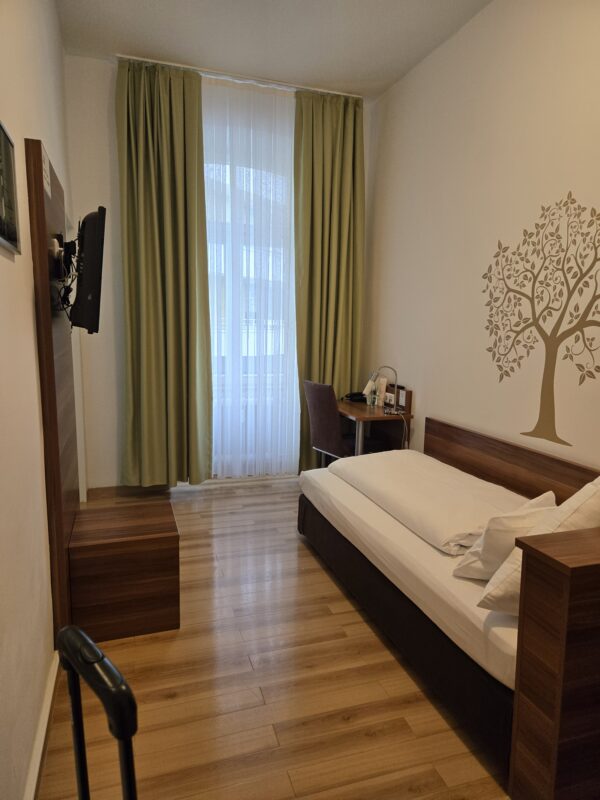
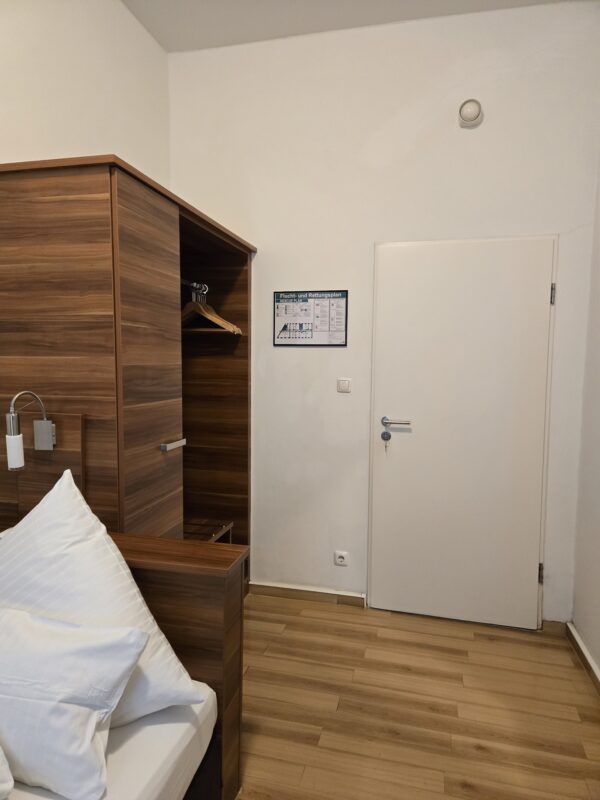
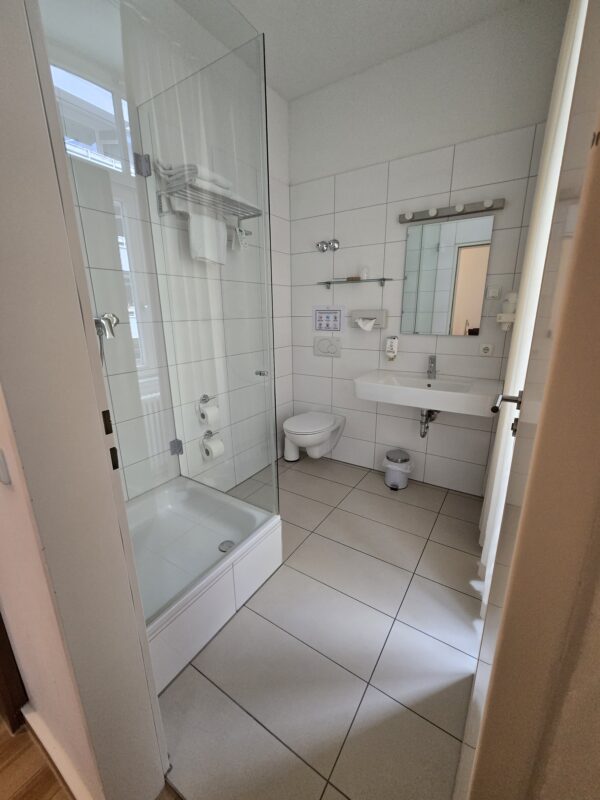
My room was a “single room” located on the hotel’s second floor. Some may consider it small, but I felt it was adequate for a solo traveler. The bed was comfortable, there was sufficient storage, and the bathroom was sizeable. There are a few power outlets by the desk and another set on the headboard. The only downside to the room was the lack of a coffee maker or a tea kettle. One of my travel habits is ending the day with a nice cup of hot tea or decaf coffee, so I really missed that while in Munich.
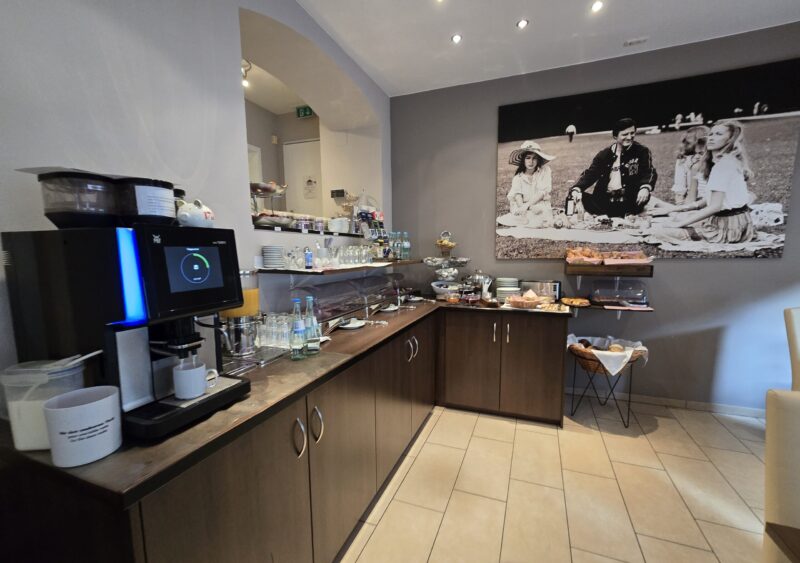
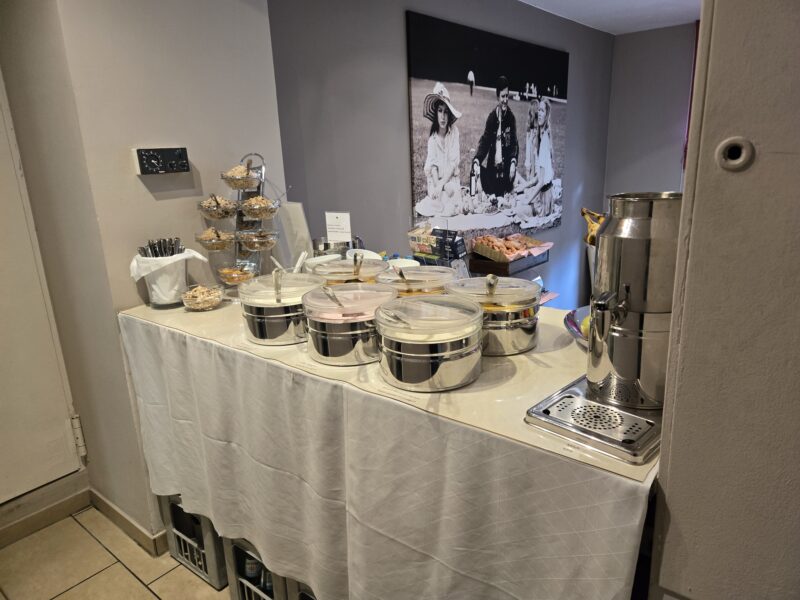
The continental breakfast offered a standard selection of breads, danishes, yogurts, granola, cold cuts, smoked salmon, hard-boiled eggs, cheese, and fruit. This hotel does not provide hot breakfast items such as scrambled eggs or omelettes. There is also a coffee machine, juice, and bottles of different types of water. My go-to for breakfast was slices of fresh mozzarella with tomatoes and a bowl of papaya-flavored yogurt (super delicious), topped with granola, along with a cappuccino or two. I was not a big fan of the eggs, as they were sometimes more soft-boiled.


Leave a Comment