
Munich transportation guide providing insight and tips on the city’s airport and public transit system.
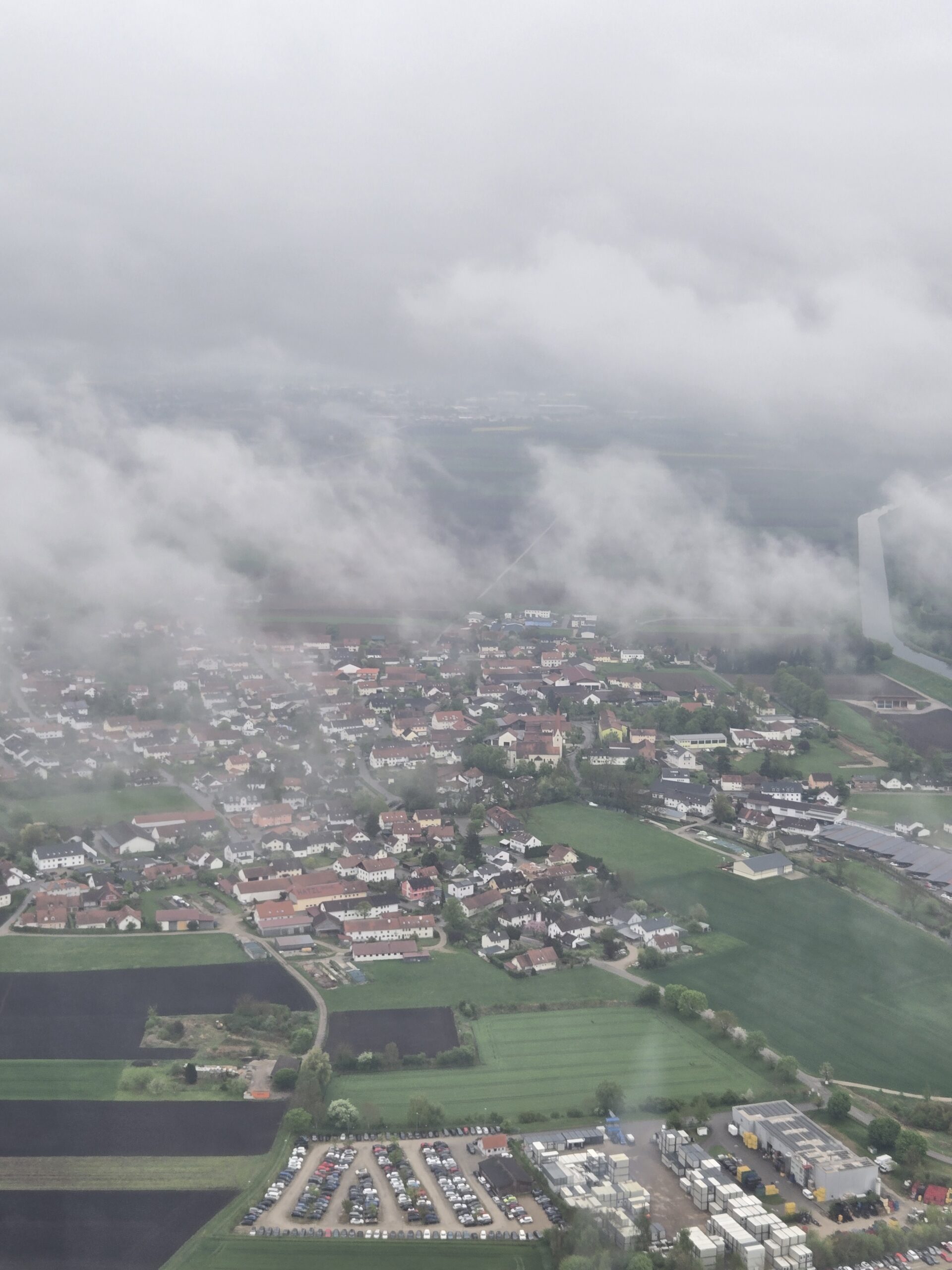
Munich Airport (MUC) is the second-busiest airport in Germany and serves as a gateway to the Upper Bavarian Region. The airport is a hub for Lufthansa (Germany’s flagship carrier) and currently consists of two terminals and a ‘midfield’ terminal. Located between the two main terminals is the Munich Airport Center, a shopping and recreation area that also hosts an annual Christmas Market during the holiday season.
Once in the city, travelers can explore Munich using its robust public transportation system, which includes the S-Bahn, U-Bahn, and an extensive network of buses and trams. This guide shares my experience at MUC, along with insights and tips for navigating Munich’s transit system, including how to use the city’s transportation app.
Guide to Munich International Airport
For my spring trip (April 2025) to Europe, I arrived at MUC but departed from Vienna International Airport (VIE), so my experience at this airport is limited to arrivals. I’ll admit that my time at MUC was a bit of a blur, as I arrived after several delays and very little sleep (I rarely sleep on planes). That probably explains why I have no photos of the airport itself.
My flight arrived at MUC’s Terminal 1 on a Thursday morning, and passengers were taken to the terminal building via bus. Given MUC’s status as Germany’s second-busiest airport, I expected long lines at passport control, but that morning there were none. Since I was traveling with only carry-on luggage, I headed straight to the train station from passport control, which was about a 20-minute walk.
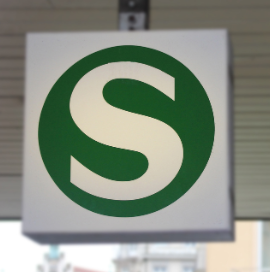
Passengers at MUC have several public transportation options, along with the standard ride-share and taxi services. To save money, I opted to take the S-Bahn (German rapid transit train) from the airport, as there was a station within walking distance of my hotel near the city center. For reference, I paid around $16 USD (the amount charged to my card after exchange conversion) for a single-ride train ticket, while fellow tourmates who took a taxi to the hotel paid about $70 USD.
Finding the train station from passport control is relatively easy – simply follow the green “S-Bahn” signs throughout the terminal. As you approach the station from Terminal 1, the ticket kiosks will be to the right of the entrance. There are several machines, so waits are minimal, and the ticket-buying process is simple (took me about 5 minutes at the kiosk). Those who prefer a digital ticket can purchase one via the MVV-APP (Munich’s transportation app).

There are several ticket types available, including single-ride tickets, day passes, and group tickets. Visit Munich’s MVV page on tickets and fares for more information.

The ticket kiosks accept most credit cards.
Once you have your ticket, descend to the station via the escalator or elevator, then proceed to the platform for the S1 or S8 line. Both trains will take you to the city center; the main difference is their routing: the S1 loops westward, while the S8 travels eastward. The journey takes approximately 40 minutes, and each train is equipped with luggage racks for your convenience.
If you purchase a paper ticket, check whether it includes a printed date and time. If it does not, be sure to validate it at one of the small blue validation boxes near the station entrance to avoid a hefty fine!
Before boarding, there are a few important safety tips to keep in mind. While on the platform and later while on the train, keep a close eye on your luggage. After boarding, be sure to keep any bags containing sensitive documents or valuable electronics, such as passports, cameras, or laptops, with you at all times.
Another reliable and affordable public transportation option is the Lufthansa Express Bus. This service is available to all passengers, regardless of airline, and runs from the airport to Munich Central Station around every 20 minutes.
For more information on the Lufthansa Express Bus, train service, and other public transit options, visit MUC’s official public transportation page.
Getting Around Munich
Travelers visiting Munich can skip renting a car, as public transportation is generally reliable for getting around the city and for reaching nearby destinations like Füssen (Neuschwanstein Castle) or Salzburg, Austria. For my 5 days in Munich, I relied on trams to navigate the city and used the S-Bahn to get to my hotel and for my day trip to Dachau. Overall, my impression of Munich’s public transit system was positive, despite occasional punctuality issues.
Munich’s public transportation is accessible to people who use wheelchairs and mobility scooters. Most stations and vehicles are equipped with elevators, ramps, and designated accessible areas.
Transportation App
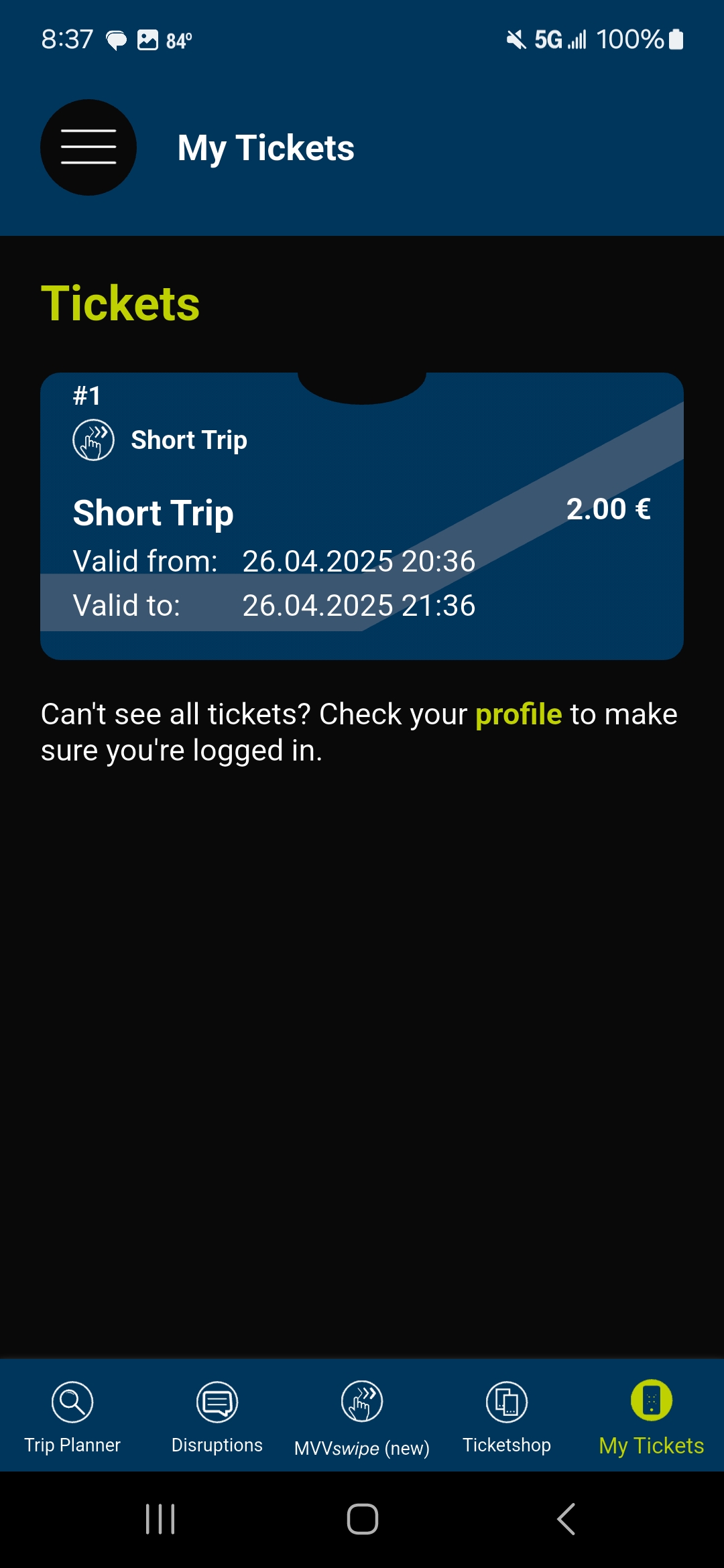
One of the biggest positives of Munich’s public transit system is the MVV-APP, which travelers can use to plan their trips, locate stations, purchase tickets, and more. I found the app to be a great resource, with its convenience and ease of use. The trip planner feature is a helpful tool that’ll list upcoming departures, connecting trains, trams, and buses, and the one-way cost. Another benefit of the trip planner is that it eliminates the need to figure out fare zones, as they are already factored into the cost. To quickly and easily purchase tickets, travelers can set up a profile on the app and then store a credit card.

On the app, the tickets will clearly note the validity period. Keep this timeframe in mind to avoid fines!
Trains
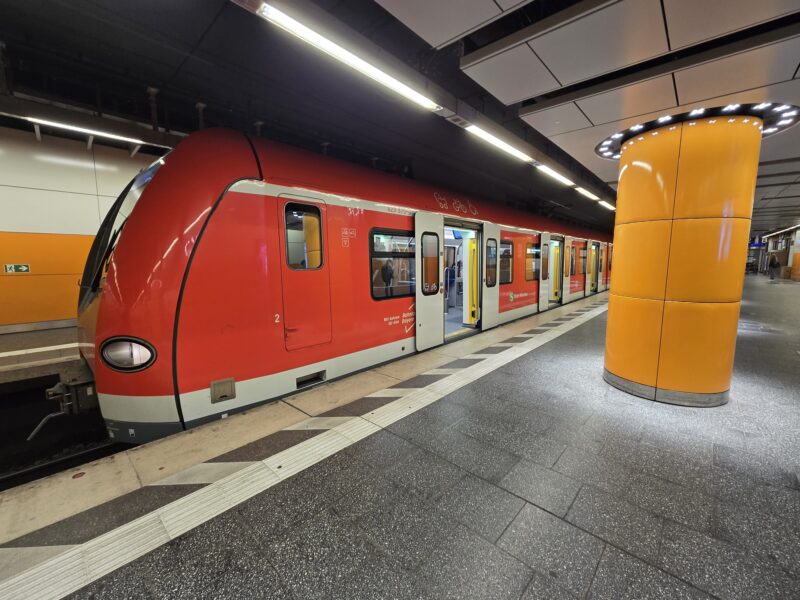
Munich’s S-Bahn and U-Bahn are a great, reliable way to travel longer distances across the city and beyond. On this trip, I rode the S-Bahn three times: once to get to my hotel from the airport, and then for my day trip to Dachau. Unlike my experience at MUC, for the journey to Dachau, I used the MVV-APP to plan the trip, find the stations, and purchase the tickets.
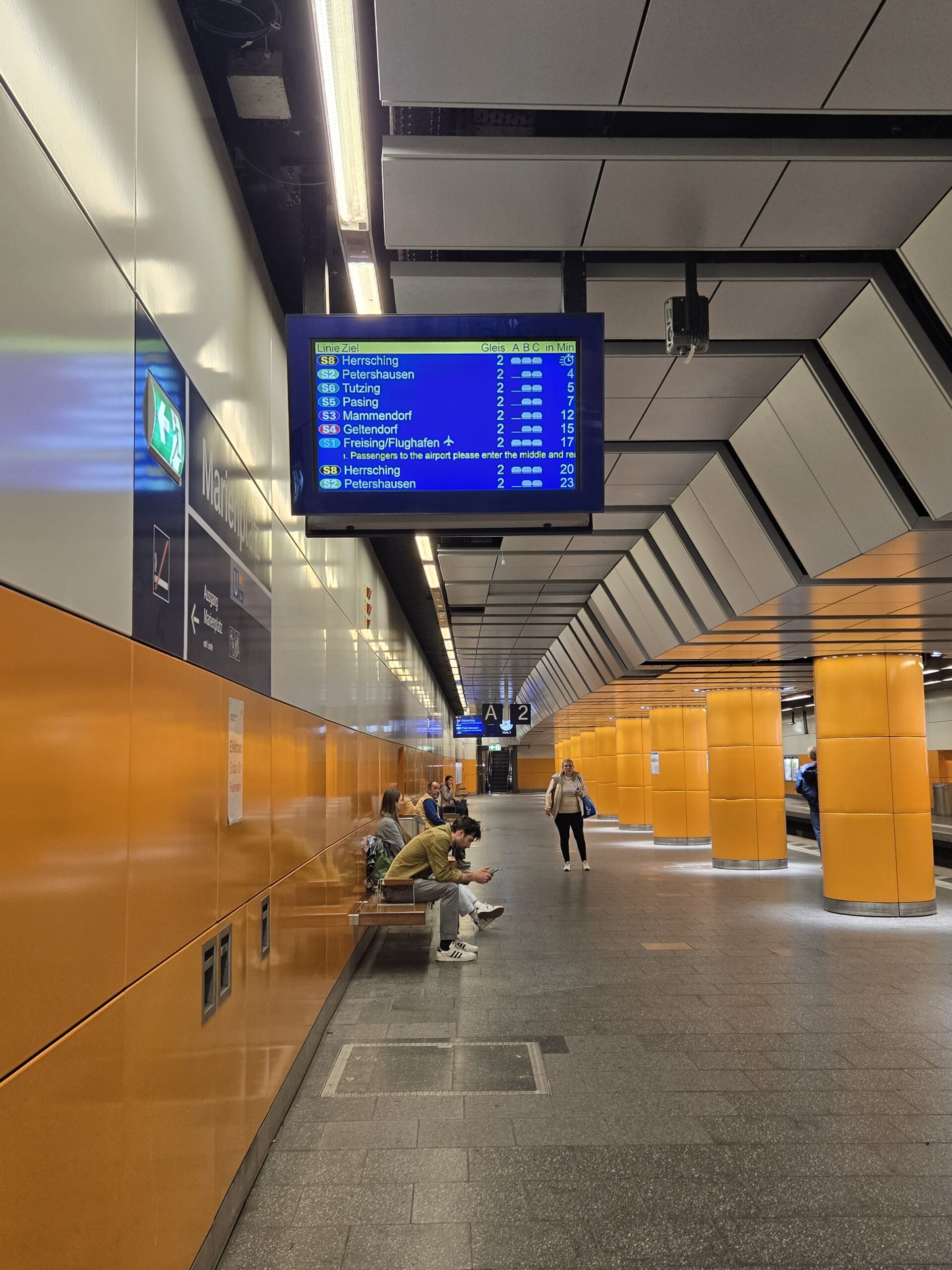
It is easy to locate the stations, but navigating the larger ones can be confusing. Stepping into the Marienplatz Station was a bit overwhelming at first, but fortunately, there was an information kiosk where I could ask the attendant for directions. On the other hand, some stations, like the one at Dachau, are rather small, so travelers will have fewer issues locating the correct platform. Once at the station, you’ll see multiple departure boards listing the routes served, destinations, platform number, and the minutes until departure. The boards also provide essential information, such as which section certain passengers should board.
When it comes to the train, the destination shown on the front is usually not the name of the next stop, but the station at the end of the line. For example, the S2 train, which takes passengers to Dachau, will show “S2 – Petershausen”, with Petershausen marking the end of that route.
Always pay attention to special boarding instructions on the departure boards and check the digital display on the side of the train cars, as some trains split mid-journey. An example is the S1 line, which splits en route to the airport, with some cars heading to MUC and others to Freising.
The trains are not always punctual and may sometimes stop at a station for an extended time. As such, it is recommended to factor in extra travel time to accommodate delays.
Trams
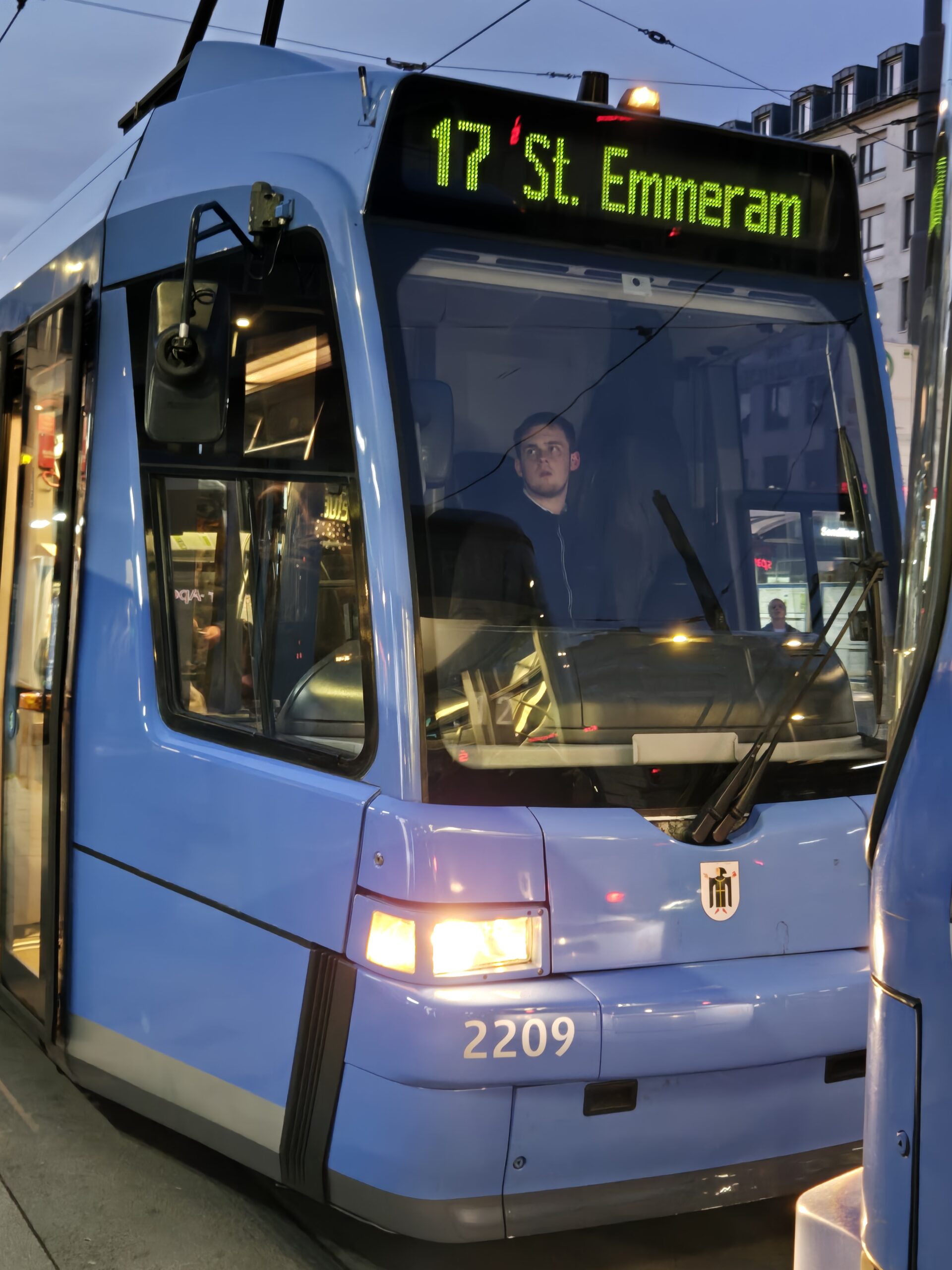
My hotel, the Hotel am Viktualienmarkt, was conveniently located within walking distance of many must-see sites, but I had to rely on the trams to reach the museums in the Kunstareal and the Deutsches Theater. The process and naming conventions for buses and trams are similar to those used for the S-Bahn. As with trains, travelers can use the MVV-APP to plan their trip, find the nearest stop, and buy their ticket. I found the trams to be a great way to navigate the city and a wonderful cost-saving alternative to ride-sharing and taxis.
Safety
As a solo female traveler, safety is always on my mind, especially when it comes to public transportation. Fortunately, I never had any issues or felt unsafe at any of the stations and stops or on board the trains and trams. Major stops, like Sendlinger Tor, which serves several major routes, are well-lit and always have a large number of passengers waiting. Smaller, less popular stops may not be as well-lit, so in the evenings, I recommend catching a cab or using a ride-share service.
Resources
Simply Munich, the official tourism website for the city, has a great page detailing all the ways you can get around the city, from trains and trams to bikes and scooters.


Leave a Comment