

Whether you’ve taken one trip or one hundred, choosing the right accommodation is often one of the most challenging and time-consuming steps in trip planning. Travelers need to scroll through endless lodging options and read countless reviews, all while trying to find something that fits their needs and budget.
In my 30 + years of traveling, I have stayed in hundreds of accommodations, from cozy inns and cabins to modern chain motels and hotels. Some have been memorable for all the right reasons, while others have had me questioning if I should find another place.
This guide features a comprehensive checklist covering eight key areas to help streamline the selection process and help travelers avoid common pitfalls. Along the way, I share resources that I use when trip planning, along with lessons learned from years of travel.
Checklist to Choose the Perfect Accommodation
Accommodation Location
Finding the optimal lodging location can be challenging, but focusing on the trip’s purpose can help you narrow down the list considerably.
If the primary purpose of your trip is sightseeing, it’s best to choose a centrally located accommodation near attractions. For mountain and beach getaways, the location is more about the views and accessibility.
Trips Focused on Sightseeing – For trips where you’ll spend most of your time visiting attractions, dining out, and attending events, mapping out your itinerary is a great way to determine a central location. My go-to tool for mapping itineraries and narrowing down lodging locations is Google My Maps, a free resource where you can plot the places, restaurants, and experiences that interest you.
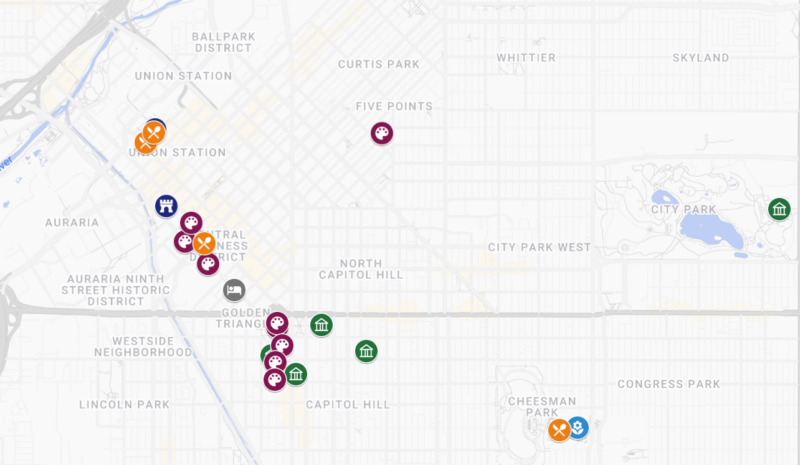
This is the My Map I created for my trip to Denver. Here, I mapped the museums, historic sites, botanical garden, and outdoor sculptures I was interested in seeing, which helped me identify a central location relative to my itinerary. If you plan to use public transportation during your trip, you can use the satellite view under “Base Map” in My Maps to get a sense of where bus and tram stops and metro stations are located. This will further help you hone in on a great location.
Budget & Location: Understandably, when choosing a location, your budget is a major factor. Centrally located hotels may cost more, leading many travelers to choose lodging on the outskirts of a city to save money. But one thing most forget to do is factor in transportation costs. Public transportation passes, ride-share and taxi costs, car rentals, and parking fees can add up quickly and negate any savings from staying farther from attractions, restaurants, and experiences. Staying farther away also requires spending additional time commuting each day, which means less time experiencing a destination and more time in transit. Adding estimated transportation costs and time to the expected total lodging costs can give you a clearer picture of which options offer the best balance between location, budget, and convenience.
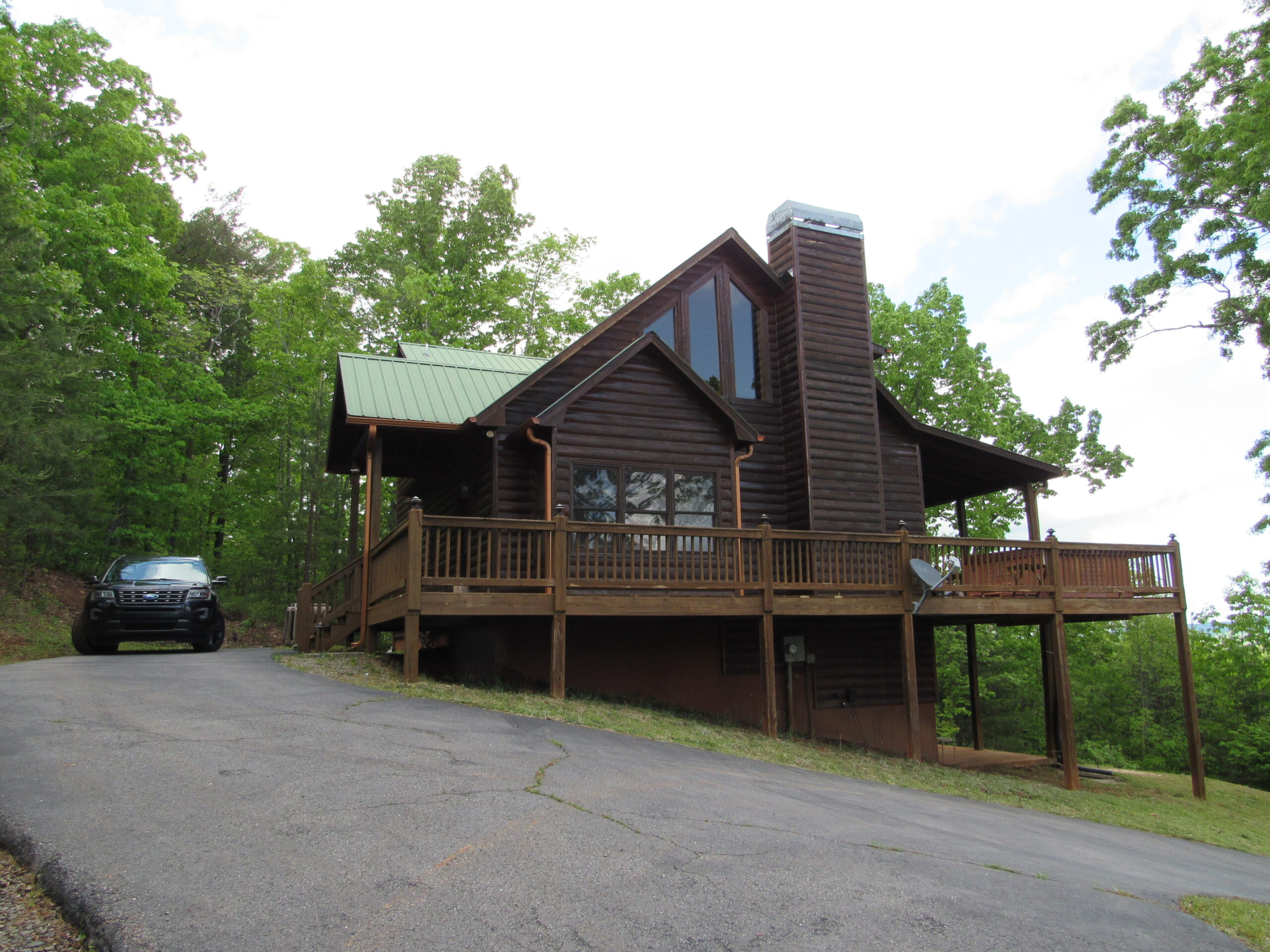
Mountain Getaways – When it comes to mountain cabins, choosing the ideal location requires a slightly different approach. From experience, it is important to select a cabin that is reasonably close to a town for easier access to grocery stores, restaurants, and, if needed, a pharmacy or clinic. It is also worth checking how the cabin is accessed. Some properties can only be reached by a single road, leaving you in a difficult situation during inclement weather or a medical emergency. For example, my cabin in the Blue Ridge Mountains of Georgia was lovely, but there was only one road leading to it, and that road developed deep puddles every time it rained.
Beach Vacations – For beach vacations, location is about proximity to the water and restaurants. Many beach communities have limited parking near beach access points and little to no public transportation, so finding an accommodation within walking distance of the beach and eateries is best, especially if you will not have a car. Note that some hotels and resorts claim to have beach access, but that may not mean a short walk. Sometimes, you need to traverse parking lots, trails, and sand dunes before reaching the beach (keep in mind that you may be lugging a lot of beach gear, especially if traveling with children).

Be cautious when choosing lodging near airports, as those areas are often industrial and have more safety issues; also, try to avoid entertainment districts (i.e., areas with a high density of bars, clubs, etc.).
Safety & Health
As a solo female traveler, I consider safety the most important factor, more than location. After I hone in on an ideal location using My Maps, I do a deep dive into how both the neighborhood and the property itself rank on several safety factors before making a reservation.
NOTE
It is important to remember that safety and health standards vary widely across countries, and not all have, or consistently enforce, regulations and best practices. For example, it is common in the U.S. for hotels to have safety equipment (smoke detectors, fire extinguishers), clearly marked exits, and adequate lighting; however, that is not always the case abroad. In some countries, while more modern lodging may have standards similar to those in the U.S., that is not always the case for historical or smaller, independently owned properties.
Also, just because an accommodation is rated 4 or 5 stars does not necessarily mean that standards are higher or that policies are enforced. On one of my trips abroad, I stayed at a 4-star brand-name hotel, and to my surprise, I found mold in the shower and no toilet paper in the bathroom.
Always do your research before committing to a property!
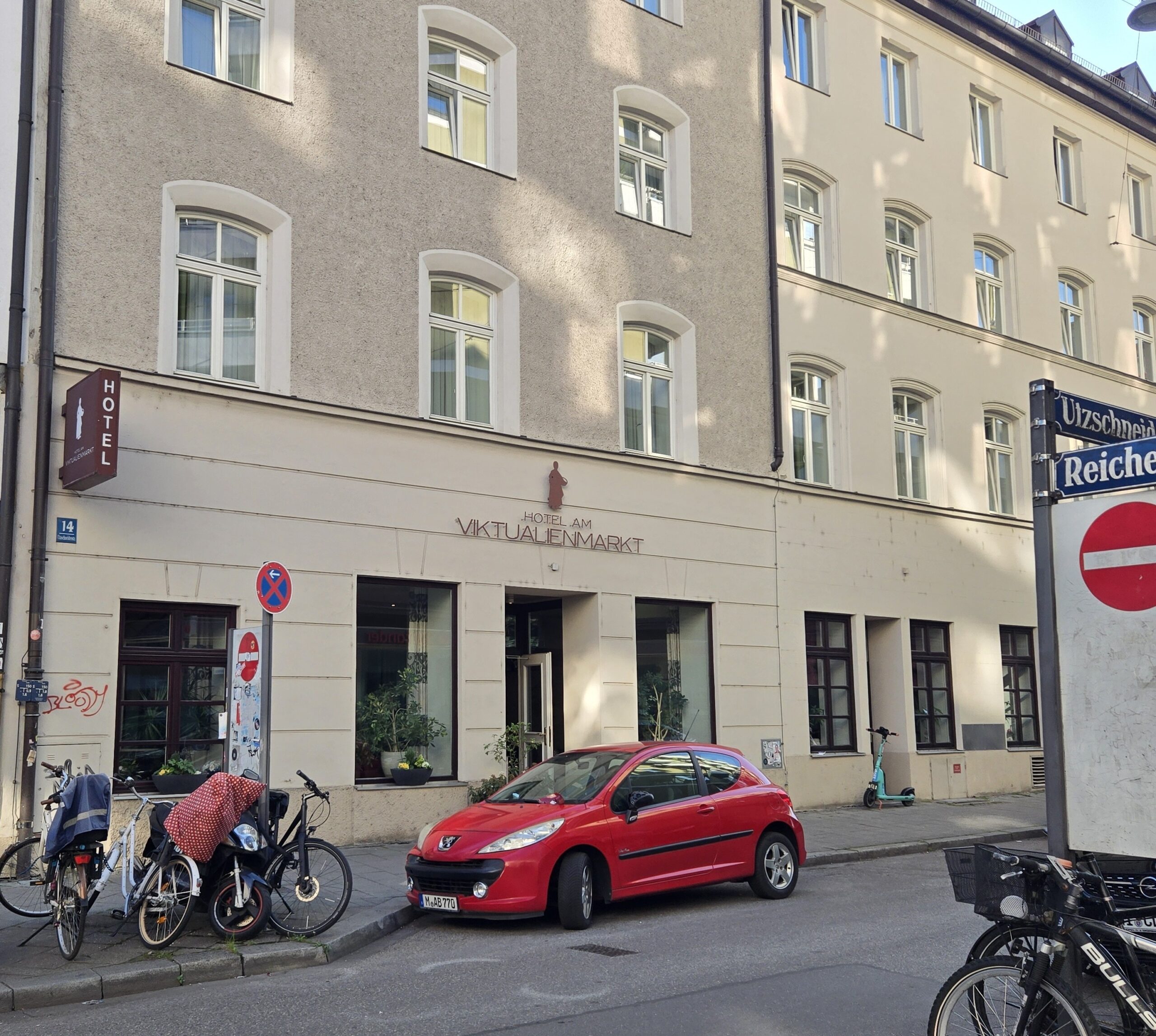
These are the factors I consider when evaluating safety and health. Google Maps’ Street View is a great tool, as are guest photos posted on trusted review sites such as TripAdvisor. I’m always a bit wary of relying solely on photographs posted by corporate/management, as those may be edited (what manager will post an unfavorable picture to promote their property?). Also, be mindful of images from travel sources that are paid partnerships.
- Lighting: I use photos to see the light fixtures on and around the property. Does the entryway have ample light? Do sidewalks and walkways have an adequate number of light fixtures that light the way? Does the neighborhood have a decent number of streetlights?
- Sidewalks: I review the same photos to assess the availability and condition of sidewalks. If you will mainly be walking to and from attractions and restaurants, you want to ensure you can do so safely.
- Cleanliness: This factor covers safety and health and is particularly important when traveling abroad. Look for signs of poor sanitation (trash strewn about the property or overflowing trash cans and dumpsters), rusted fixtures, frayed carpets, dripping air conditioning units, and mildew and mold.
- Exterior Upkeep: Are trees and shrubs pruned or overgrown? Are exterior walls and windows relatively clean, or do they show signs that the property has not been painted or maintained? For properties with an outdoor pool, check the condition of the deck and pool and the availability of safety devices such as pool railings and lifesavers. If you plan to use the gym, check recent user photos to see whether the equipment appears well-maintained.
Why do sidewalks matter? For my first trip to Egypt, the tour company selected a good hotel that, unfortunately, was surrounded by sidewalks with missing sections and, overall, in poor condition. This meant that to walk around the neighborhood, you basically had to walk either on the streets or the narrow gap between the sidewalks and parked cars.
In addition to using photographs to assess a property’s condition, I search for the following keywords in guest reviews, as they often highlight red flags and may indicate that an accommodation is unsafe or poorly maintained.
- Mold and Mildew
- Moist/wet carpets
- Propped doors (major safety alert!)
- Dust/dusty
- Bed bugs (definitely avoid properties where numerous reviews mention this)
- Roaches/bugs/insects/rats
- Poorly lit/dim/dark
- Stained bedsheets/towels
- Broken locks (for windows and doors)
- Broken security cameras
- Old/expired food (for accommodations with breakfasts and markets)
- Noisy/street noise
- Smoke smell (common in many countries abroad)
A safety factor that should be considered, but is sometimes overlooked, is the drop-off/pick-up location for taxis and ride-share services. Some properties abroad may be located in a “pedestrian-only” area, so travelers need to be dropped off and picked up a block or more away. For my recent trip to Madrid, my hotel was in a pedestrian-only area, and at 6:40 AM, the taxi had to drop me off a block away from the hotel. Fortunately, it was a safe neighborhood, but it still required walking down a narrow street in the dark.
One safety feature I have gotten accustomed to in the U.S., but which is uncommon in Europe, particularly in older hotels, is peepholes (a feature that lets you look through the door to see who is knocking). If you strongly prefer this feature, reach out to the property directly to confirm whether it is available.

If possible, when staying in properties without a check-in desk, such as cabins, bed and breakfasts, and rentals, try to select those with a keypad at the entrance rather than a regular key. This avoids the safety issue of having your key left under the doormat, in a planter, in an unguarded mailbox, or in another insecure location.
Upon arriving at a cabin or rental, inspect all exterior doors and windows to ensure they are locked and that they close properly. Also, check the availability of safety equipment, such as fire extinguishers and smoke/carbon monoxide detectors.
IMPORTANT: Smoking is still prevalent in many countries and is permissible inside hotel rooms. Some accommodations may promote “non-smoking rooms”, but many times, guests still smoke in those rooms. During my 2018 trip to Egypt, I stayed in a “non-smoking” room that reeked of cigarettes and made for an unpleasant stay. Be mindful of this and do your research to ensure you select a property that either bans smoking or enforces no-smoking in non-smoking rooms.
For accommodations with shared bathroom facilities, i.e., hostels, camping resorts, and some bed and breakfasts, read reviews carefully to assess both safety and maintenance.
Check-In & Front Desk Access
This is a simple point that leans more towards convenience and preference, since front desk coverage handles tasks such as check-in, maintenance requests, and luggage storage. Not all accommodations have a front desk, like cabins and rentals, and some do not provide 24/7 coverage.
Throughout my travels in the U.S., every hotel I have stayed in has had a front desk staffed 24/7, but on a recent trip to Europe, I learned that many independently run accommodations provide limited coverage. The hotels where I stayed in Munich and Emmersdorf (Austria) were staffed until around 8:00 PM – 9:00 PM, and after that, guests had to use a key to access the property and call an after-hours number for emergency maintenance.
If you have to use a key to access the property after-hours, I recommend testing it during check-in to ensure it works and that you can open the front door.
A lack of front desk or limited coverage can also impact luggage storage. Bed and breakfasts usually can accommodate luggage storage requests, but that is not always the case with cabins and rentals. If you require such service, reach out to the property manager for alternatives.
If staying in a property with no front desk and entry via a keypad or a stored key, always confirm the code and the key’s location 24 hours prior to arrival. Why is this important? I once rented a cabin where a key code was listed in the reservation email; yet, when I reached out to confirm the code prior to arrival, it had been updated, but I received no notification.
For accommodations without a front desk, always save an on-call number in case you run into issues accessing the property (e.g., the keypad does not work, you misplaced your key, or management forgot to store the key in a lockbox).
If staying in a mountain cabin where cell service may be limited, I strongly recommend arriving early in case the key code does not work, and you need to drive to a nearby town to get a signal in order to call the property manager.
Breakfast & Kitchen Arrangements
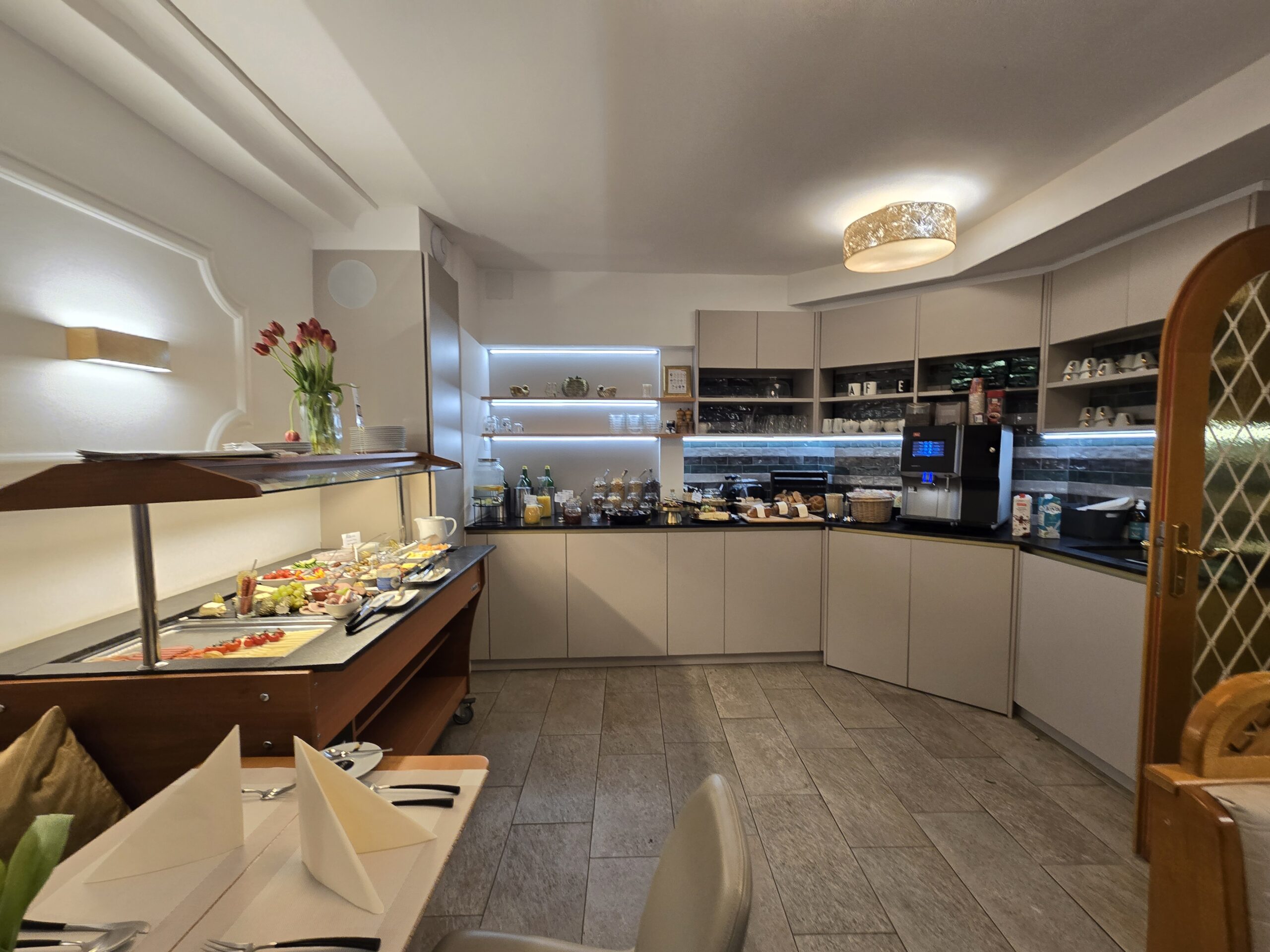
A great travel day should start with a great breakfast – a hearty meal to fuel a long day of sightseeing and walking miles. Growing up, my family always stayed in accommodations that offered a continental breakfast, and I have continued that tradition in my travels. For me, an included breakfast saves time, money, and the hassle of finding a place to eat every morning.
After staying in hundreds of hotels, one lesson I have learned is that there is no consistent standard for what constitutes a continental breakfast. Some accommodations provide a hearty meal of eggs, meats, fruit, yogurt, and an assortment of breads and treats. Others offer a lackluster menu consisting of coffee, toast, eggs, and maybe a helping of sausage and grits.
When it comes to breakfast, my recommendation is to read guests’ reviews to get a sense of what is offered and the quality. I search for keywords such as substantial, filling, hearty, fresh, delicious, and assortment, which are usually indicative of a good breakfast. If there are many negative comments about the quality, such as stale bread or undercooked eggs, that’s a major red flag to me. A bonus for me is breakfast that includes fresh fruit like bananas and apples, since I generally take one to go for an afternoon snack!
If you have dietary restrictions, e.g., gluten-free, kosher, etc., it is best to reach out to the property directly to see which food options, if any, are available to you.
Aside from the quality, time is another factor to consider when selecting accommodations. For those seeking greater flexibility, motels and hotels tend to have longer breakfast hours than bed-and-breakfasts or smaller, independently owned inns. One bed-and-breakfast I stayed at served breakfast over a 2-hour window, while the other served breakfast at a set time (not only was breakfast way too early, but it was a communal experience!).
One perk offered by some accommodations is the breakfast-in-a-box option for guests who need to check out before breakfast service begins. During my stays at the Hotel Am Stephansplatz (Vienna), the Ramses Hilton (Cairo), and the Nunne Boutique Hotel (Tallinn), I was provided with to-go breakfasts because I had to leave the hotels before 4:00 AM to catch a flight. This is not a necessity, but a nice perk!
Travelers staying in a cabin, rental, or extended stay hotel need to pay close attention to kitchen arrangements – what appliances are available and what utensils and kitchen gadgets are provided. From experience, some cabins are better equipped and stocked than others, and it is definitely worth the cost to rent one that offers most of what you’ll need. One of the cabins I stayed in required that I bring serving and cooking utensils, plus plates, cups, silverware, foil, coffee filters, etc. It felt like I was having to pack my kitchen to join me on vacation! The other cabin was a bit pricier but much more convenient, since it had plenty of kitchen gadgets and actual plates and cups. It also had a dishwasher, which eliminated having to do chores while on a trip.
If you plan to do a lot of cooking in your rental or hotel, make a list of what appliances and gadgets (i.e., can opener, peeler, food processor, etc.) you think you’ll need and send it to the property manager to confirm what is available and what you may need to pack.
Comfort & Sleep Quality
Travel comfort isn’t just about amenities. It’s about sleep quality.
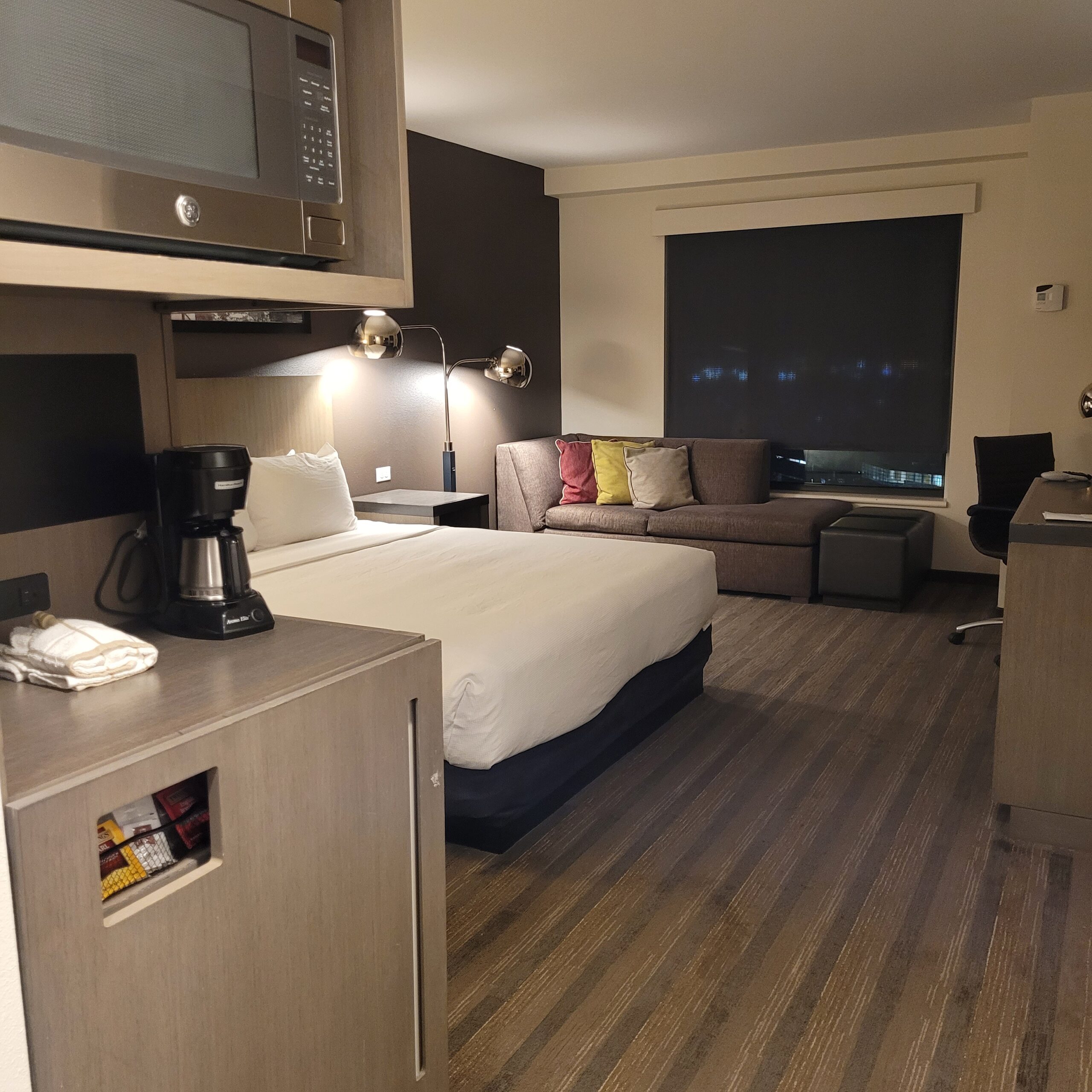
One reason many of us travel is to relax and catch up on rest, and nothing ruins a trip more than a lousy room that contributes to poor sleep. When it comes to comfort and sleep quality, factors like room size, adequate storage space, a decent bathroom, noise levels, and air conditioning and heating all play a major role.
As I mainly travel solo with minimal luggage, I don’t place much emphasis on room size, but if you’re traveling with others or with a lot of luggage, it should be considered an essential factor. No one wants to lodge in a cramped room where you’re tripping over bags! Similar to safety standards, there is no set global criterion for room size and what constitutes a single, double, etc. I have walked into double rooms that felt palatial, yet others felt like a closet. While many modern hotels provide both adequate space and storage, historic/older accommodations and bed and breakfasts may leave you trading space for charm.
When it comes to independent or boutique hotels, room styles can vary widely, even within the same category. For a recent trip to Helsinki, my parents and I each booked a “Comfort” room; their room was less furnished and felt smaller than mine, whereas their bathroom was larger.
How do you ensure a room will have sufficient space and storage for you and your traveling party? First, review the noted dimensions, and if they are not listed, contact the property for more information. This is especially important for single rooms when traveling abroad, as some can be rather small, leaving guests to feel claustrophobic. My single room in Munich was small but comfortable, with a decent-sized bathroom, and was perfect for a 5-night stay. On the other hand, my single room in Salzburg was okay for two nights, but if my stay had been longer, I would have preferred a double room with more space and a larger bathroom (my bathroom was very tiny).
Next, review the photos posted in accommodation reviews, and for bed and breakfasts, pay attention to the amount of furniture in the room. In general, rooms in bed and breakfasts tend to be less spacious, and some have a lot of furniture, which makes the space feel even smaller. For hotels and motels, also check the room layout to see whether you can walk around comfortably and open doors without issue.
It is especially important to consider room size and layout if you are requesting cots and cribs or using a sofa bed. Some sofa beds take up a lot of space when opened.
When it comes to storage, while dressers are common in hotels within the U.S., I have noticed that many hotels abroad do not have them. On my recent trips to Europe, only 2 of the 7 hotels I stayed in had a dresser or an armoire. For bed and breakfasts, many have dressers but no closets or the ability to hang clothes.
Regarding mountain cabins, many offer spacious accommodations with ample storage, so whether traveling solo or with a large party, you’ll be comfortable. Property managers generally provide a lot of information and photographs of a cabin’s interior, giving guests a good idea of what to expect during their stay.
These are a few other points to keep in mind related to comfort:
- Bathroom counter space (older places like bed and breakfasts may have pedestal sinks with no counters)
- Shower versus tub (important for those with accessibility needs and families with children)
- Bathroom amenities (blowdryers, robes, slippers)
One thing to be mindful of when reviewing rooms is the number and location of available electrical outlets. I stress “number” because older accommodations tend to have very few outlets, which can be challenging given how many chargers one travels with today. Also, some places do not have outlets in the bathrooms.
One factor that travelers value but sometimes overlook is air conditioning and heating. In the U.S., most hotels and motels offer in-room climate control, but older properties like bed and breakfasts may have limited or no systems.
When traveling abroad, air conditioning and heating are not always standard, particularly in older or historic accommodations, which is something travelers should be mindful of when planning trips during the winter and summer months. In Salzburg, my room did not have air conditioning, but it did feature a small cooling unit that helped make the temperature more comfortable. Some properties without air conditioning now provide guests with pedestal fans during the warmer months. For winter travel, if your accommodation lacks reliable heating, packing a lightweight travel fleece blanket can help keep you warm.
The final point in the section is a crucial one: noise levels. When staying in a hotel or motel, rooms away from elevators, stairwells, and ice machines, and not facing the street tend to be quieter. If you plan to sleep in, I strongly recommend requesting a room away from the elevators, as the breakfast crowd will wake you up. Also, if possible, request a room on a higher floor to help avoid street noise (or the dump truck and street sweeper at 7:00 AM).
For trips abroad, in places like Europe or Egypt, you may be woken up really early by church bells or the morning call to prayer. It is advisable to book an accommodation that is not near a house of worship, particularly if you are a light sleeper.
While accommodations near interstates and major streets may be convenient, the noise of traffic and sirens may keep you up at night. It is best to find a place near a side street, where there is minimal traffic.
Accessibility & Mobility Factors
Many hotels and motels in the U.S. must comply with ADA accessibility standards (e.g., ramps, braille on signage), but that is not generally the case for smaller inns, such as bed and breakfasts, or mountain cabins. However, some bed and breakfasts have retrofitted their properties to make ground-floor rooms accessible to all, and some cabins have been constructed or renovated to be accessible.
When traveling abroad, many destinations lack accessibility policies or best practices, making it more challenging to find suitable accommodation. In Europe, more modern hotels are accessible, but older, historic properties may lack barrier-free entrances, elevators (or have incredibly small ones), narrow doorways, and handrails in the bathroom.

Be mindful that even if a property is accessible, the sidewalks and surrounding area may not be. For example, in a historic district, sidewalks may be narrow or lack a curb ramp.
From experience, staircases in bed and breakfasts and historic European hotels tend to be narrow or spiral, which can be difficult to navigate, particularly for those with mobility or balance issues.
Parking Logistics
Parking at hotels is less feasible than it once was, becoming less convenient and more expensive. Some hotels, particularly mid-range to luxury hotels, are eliminating the self-parking option and relying solely on valet parking, which can sometimes cost upwards of $60 per day. Those who prefer self-parking will need to park off-site, and those lots may not be nearby, which can be inconvenient when traveling with children or individuals with limited mobility, or when loading and unloading luggage. Accommodations located in a city’s downtown or a historic district may have limited parking, regardless of type, which may require guests to park off-site.

Hotels may charge extra for valet parking for oversized vehicles, so contact the property to see what they consider “oversized” and whether there is a height restriction.
Some accommodations and parking garages are beginning to place restrictions on electric vehicles due to battery/fire safety concerns, so it is worth confirming policies in advance
Fees, Hidden Costs, & Policies
If there is one thing I have learned in my travels, it is that hotels like fees, and if you don’t read their policies carefully or fully understand what the nightly rates include and don’t include, you’ll wind up paying a lot more than expected.
While most hotels and motels include basic amenities such as pool access, a gym, and a business center in the nightly rate, there are many additional fees that can catch travelers by surprise.
Here are some common additional lodging fees:
- Amenities fees (cover things like spa services and may be charged whether or not they are used)
- Resort fees (these fees may be steep, and sometimes travelers do not use any of the included services)
- Cleaning fees (common in rental properties)
- Internet/phone fees (more common abroad and in rental properties)
- Laundry services (off-site laundry services may be less expensive)
- Upper floor fee (some hotels may charge extra for rooms on higher floors)
- Extra guest fees (some places charge extra when 3 or more adult guests are staying in the same room)
Cancellation fees are another cost that can add up quickly, so it is important to know the exact cancellation deadline for the particular room and rate you selected. For example, while booking a hotel for an upcoming trip, I noticed that the same room allowed me to cancel for free, but depending on the rate, the cut-off was either 24 or 72 hours before check-in.
Another common set of fees is for early check-in or late check-out. I had one instance when I had to request early check-in because my international flight arrived very early, and the fee was essentially the equivalent of a one-night stay.
When staying in a rental property, take date-stamped pictures of the interior before leaving. This serves as proof in case the property manager charges additional cleaning fees or damage fees.
I strongly recommend that travelers review their receipt at checkout and ask questions and contest charges before leaving the property, if possible. From experience, I have had better luck resolving billing issues in person, rather than by email or phone calls after my stay.
Fellow travelers, I hope you found this guide helpful in selecting that perfect accommodation for your next trip. In the comments section below, share some of your favorite tips for selecting lodging.




Leave a Comment