
Destination guide to St. Stephen’s Cathedral, Vienna’s iconic Gothic landmark known for its history, towers, crypt, and stunning city views.
History
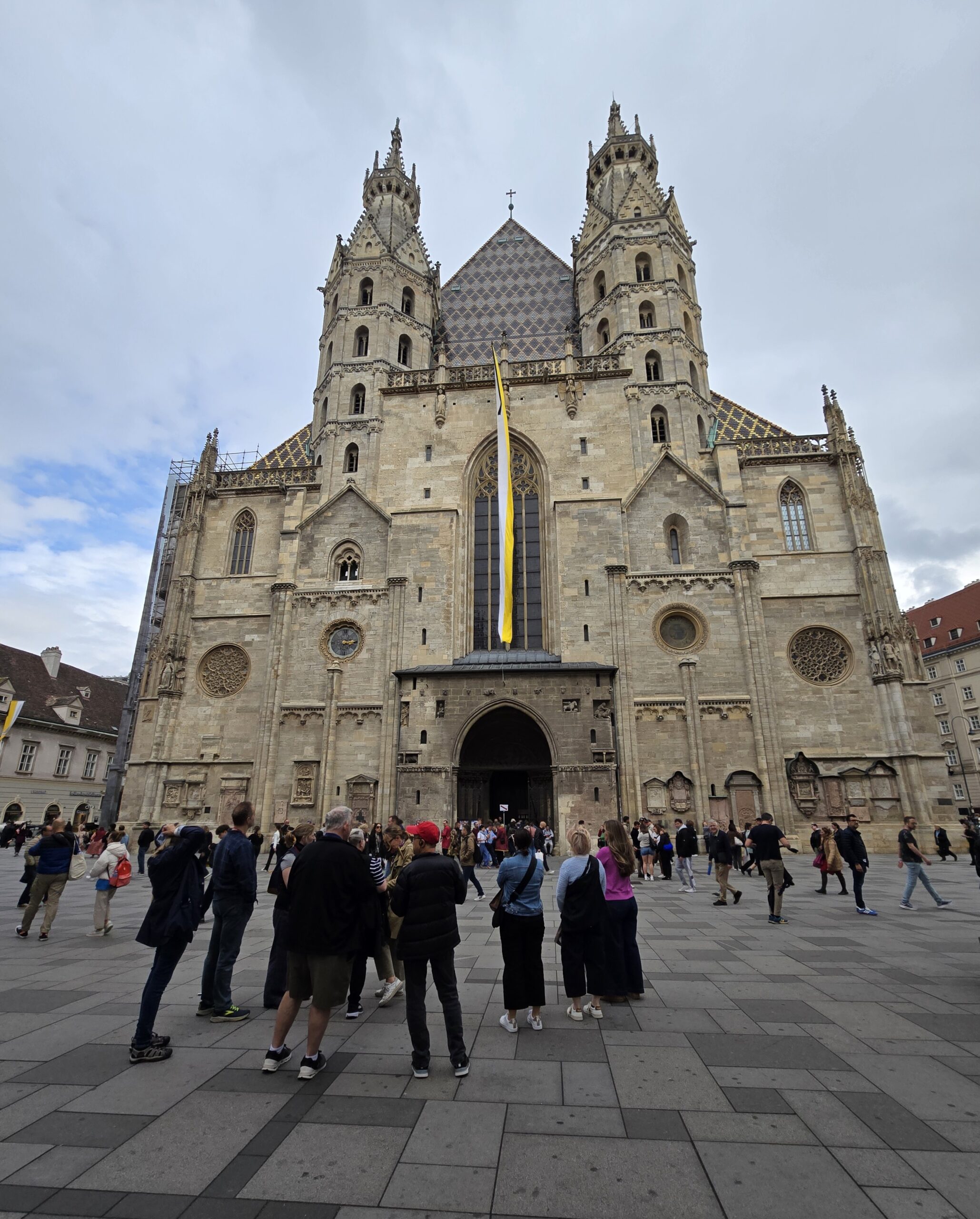
St. Stephen’s Cathedral has a long, storied history, with the first mention dating back to 1137, the year it is believed construction began on a Romanesque-style church. The church was officially consecrated in 1147, and later, in the early 1200s, a second Romanesque structure was built, of which sections are still visible today, including the west facade and the Heidentürme (the Pagan Towers). The following two centuries saw the completion of two major construction projects: the Gothic choir and the Stephansturm (South Tower). Work on the Adlerturm (North Tower) started in the mid-1400s, but construction was halted in 1511, and the structure was never completed. In the centuries that followed, a Baroque High Altar was consecrated in 1647, and the catacombs beneath the church were established in the 18th century.
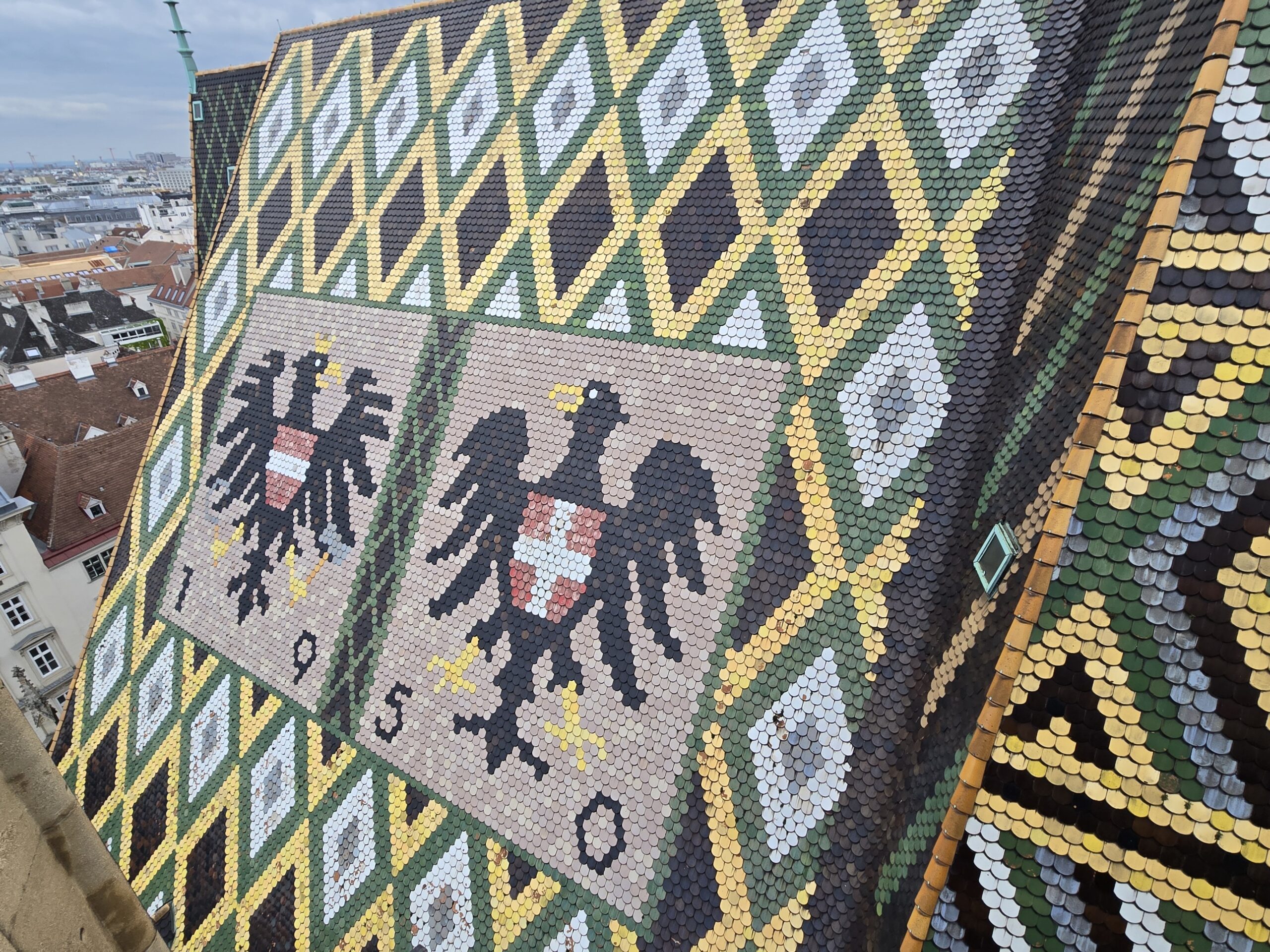
During World War II, St. Stephen’s Cathedral suffered the same fate that befell other great churches throughout Europe. Homes in the area had caught fire, and flying sparks caused a major blaze that damaged the church, including the collapse of the roof and supporting walls. The fire also destroyed the church bells, artwork, and Gothic choir stalls. The replacement roof was redesigned using lighter steel instead of wood, and it was covered with beautiful mosaic tiles.
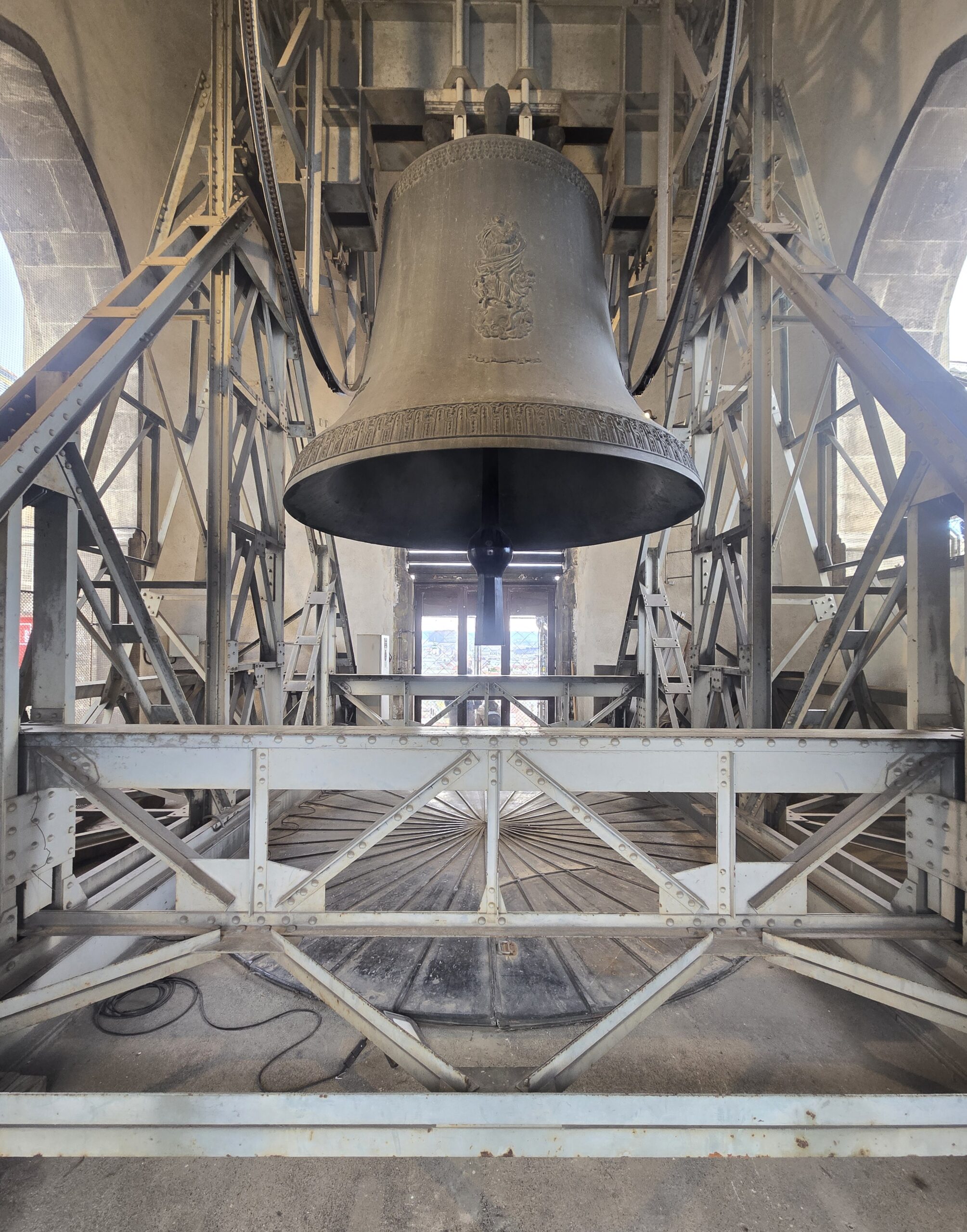
The Pummerin, Austria’s largest bell, was cast in 1711 and originally hung in the South Tower. It tolled for the first time on January 26, 1712. Sadly, the bell was destroyed in the great fire of 1945 when it fell from the tower.
A new bell was cast in 1951, and since 1957, the new Pummerin has hung in the North Tower. Today, visitors who climb the North Tower can get a close look at this massive bell, which weighs 21,100 kg (around 23 tons).
Visiting St. Stephen’s Cathedral in Vienna
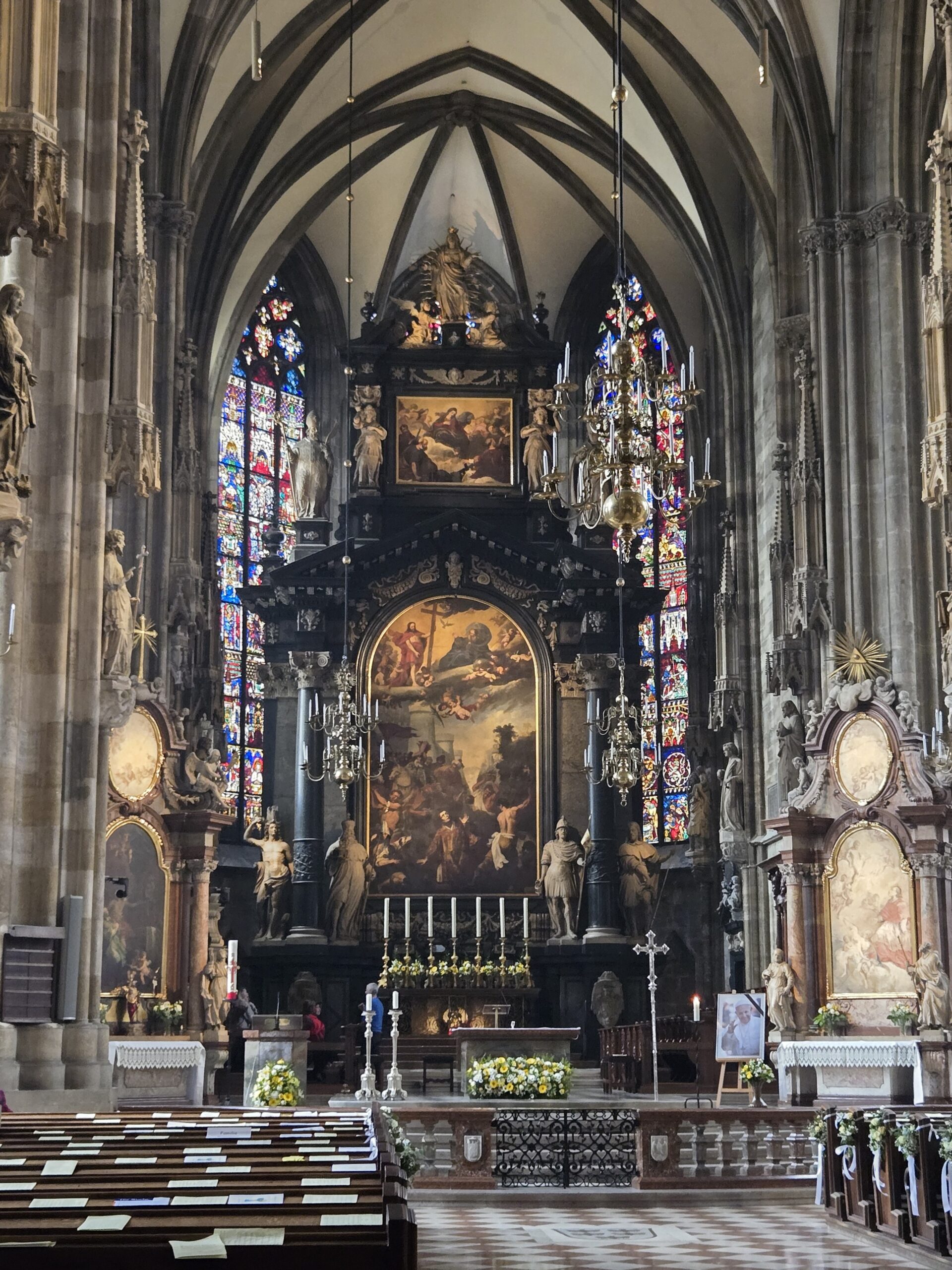
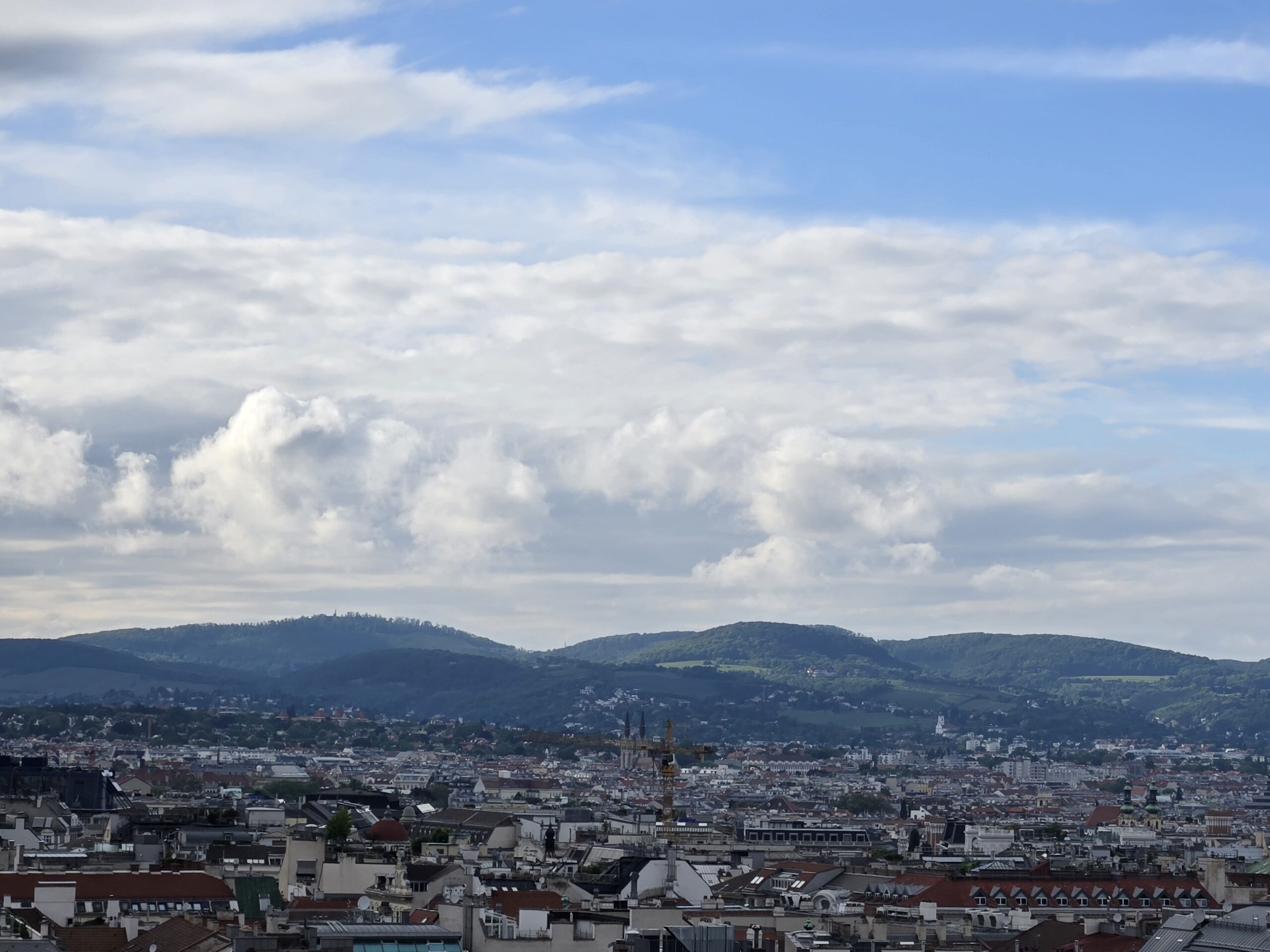
After my Rick Steves’ Europe tour, I stayed two extra days in Vienna, one of the reasons being the chance to visit St. Stephen’s Cathedral. I enjoy exploring historic churches, as I am fascinated by their history, artwork, and intricate interiors. Here, I also had the opportunity to tour a crypt and climb to two towers for sweeping views of the city. Overall, St. Stephen’s Cathedral was a highlight of my trip, and the views from the North Tower were wonderful. The crypt, while interesting from a historical perspective, was a bit too macabre for my taste (I’ll provide more details below).
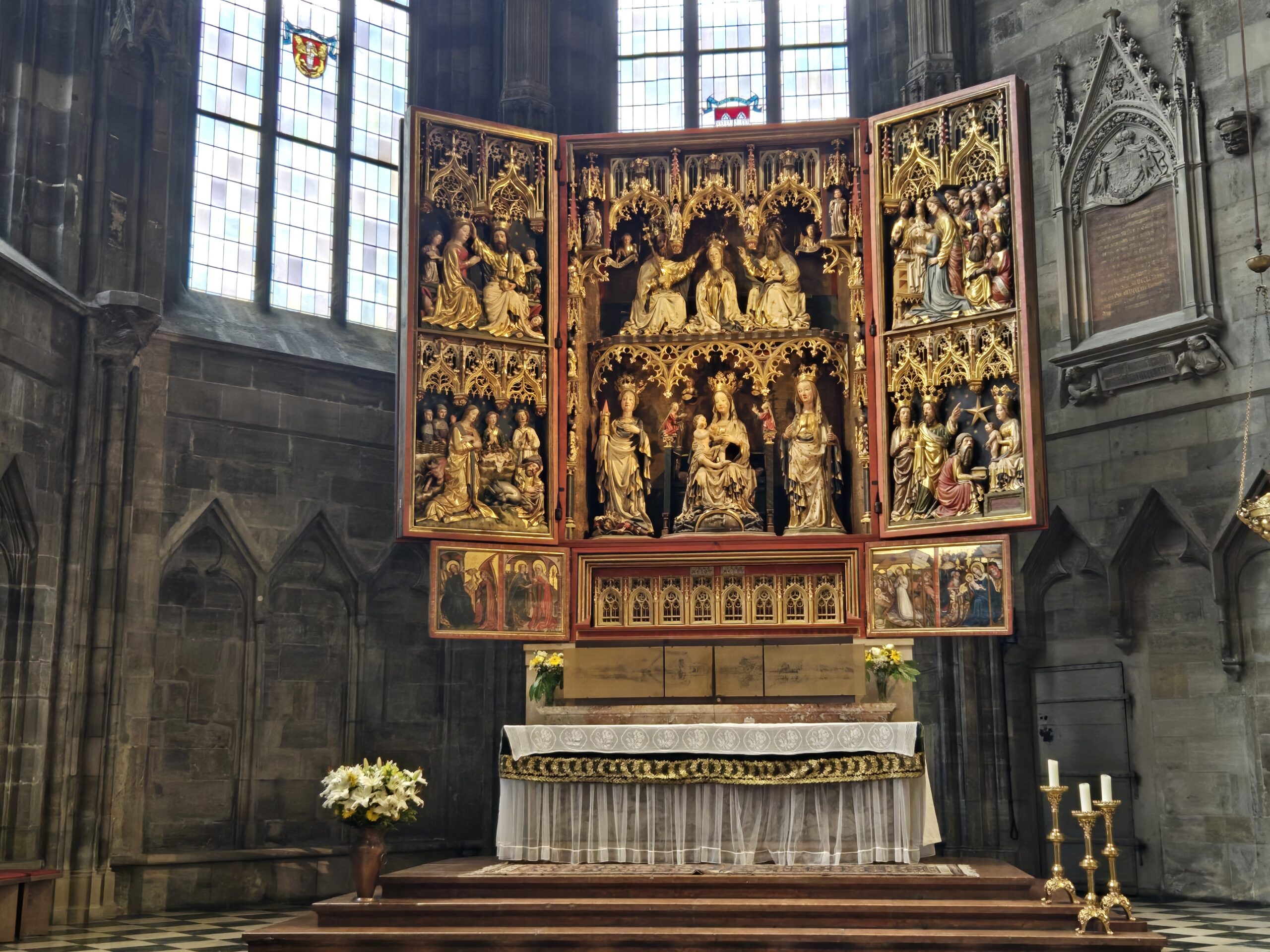
When visiting St. Stephen’s Cathedral, guests have the opportunity to explore the church’s interior, climb two towers – one by foot, the other by elevator, and tour a crypt. Guests can also visit the Cathedral Museum and the Treasury of the Teutonic Order, but note that both are near the church, not part of it. On this trip, I unfortunately did not have time to visit either, as my adventures of climbing the South Tower took considerably longer than expected (plus it wore me out).
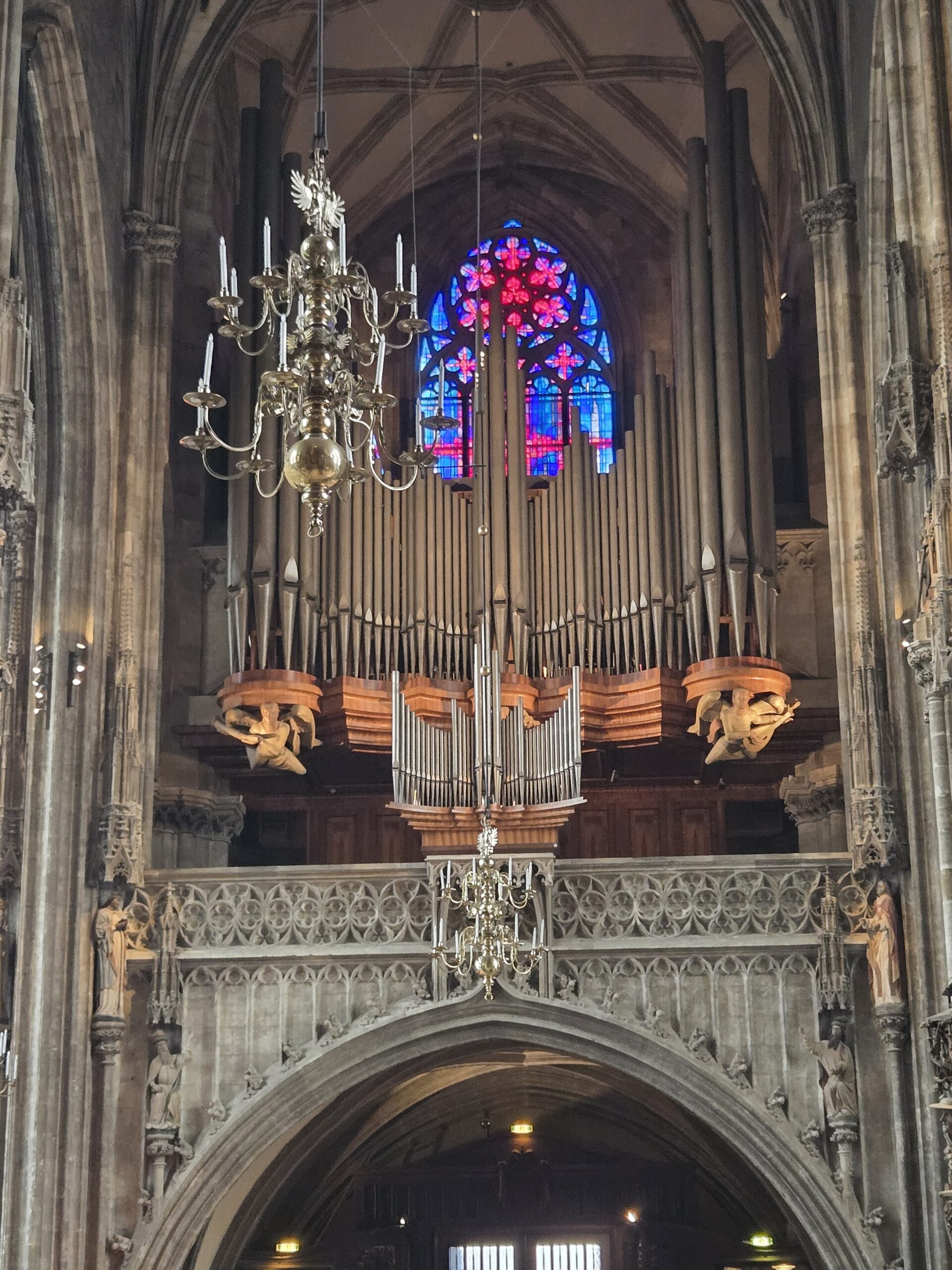
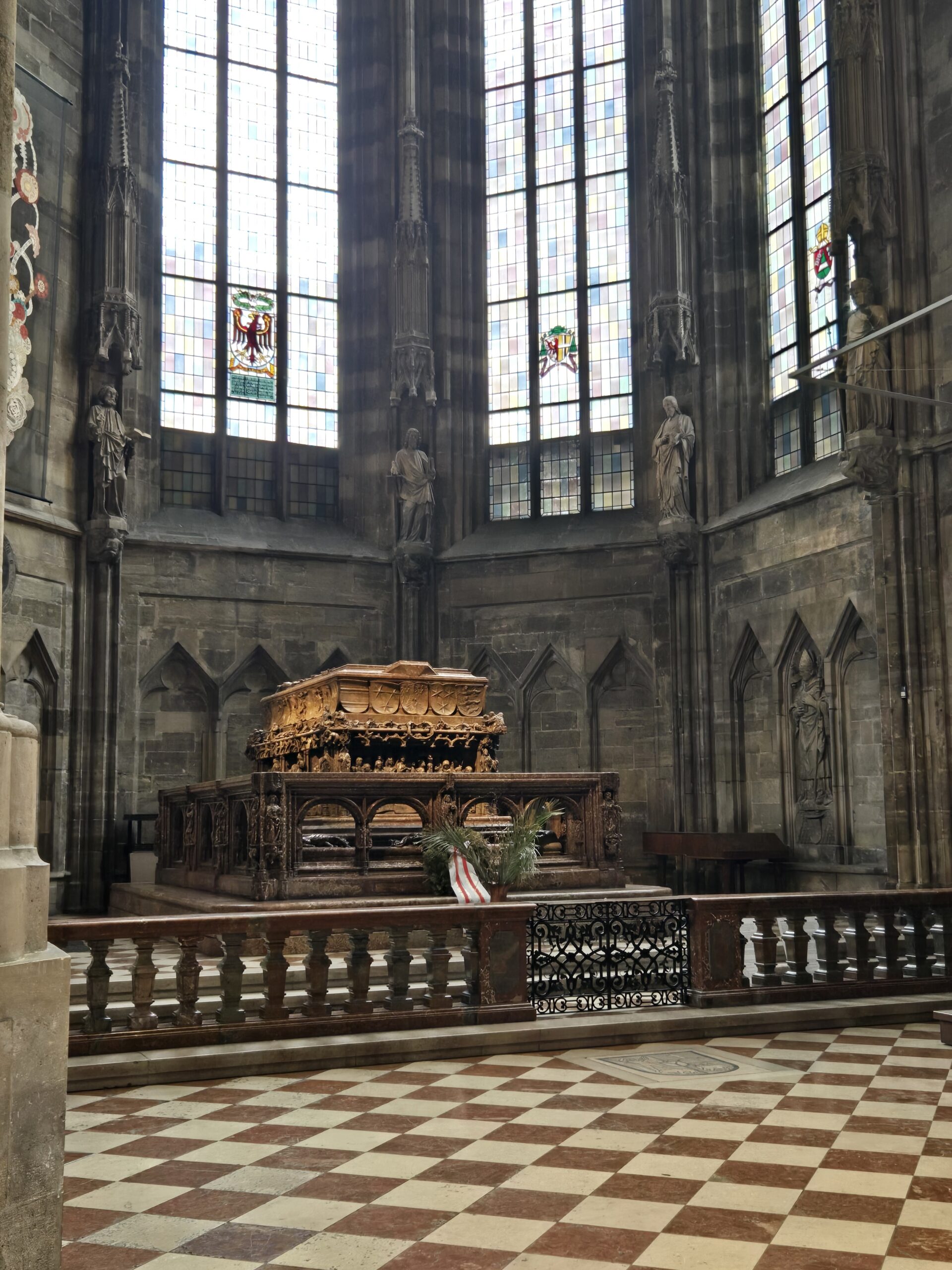
Unlike other European churches I have visited, at St. Stephen’s Cathedral, you do need to pay an admission fee to walk around the interior, with the fee including an audio tour accessed via your phone. If you do not wish to pay the fee, you can view the interior from behind a gate towards the back of the church. The audio tour is comprehensive, with about 20 stops throughout the interior, and I found it worthwhile. Altogether, I spent about 40 minutes listening to the tour and admiring the artwork, relics, and beautiful details.

If your phone is running low on battery, the church rents power banks, which is a good option if you plan to do the audio tour and take many pictures.

To save money, I recommend buying the All Inclusive Ticket, which covers admission to the church, access to the two towers, the crypt tour, and admission to the Cathedral Museum. When purchasing, you also receive a voucher for the Treasury.
To visit the crypt, you must join a guided tour, which lasts approximately 25 minutes. This tour begins by guiding participants through rooms lined with the caskets of bishops and royals, then into a room filled with fragments of the church’s exterior that have broken off over time. That part of the tour I found to be interesting and had no issue with. From there, the group is led through rooms and halls piled with bones and skulls that appear to be eerily staring at you. I would have preferred not to have lingered in these areas, but the guide stopped several times to discuss the crypt, its discovery, meaning, and the bones. As you need to be with the group at all times, there was no opportunity to move ahead and exit the crypt.
Photography is not permitted in the crypt. Also, at the end of the tour, participants are welcome to tip the guide.
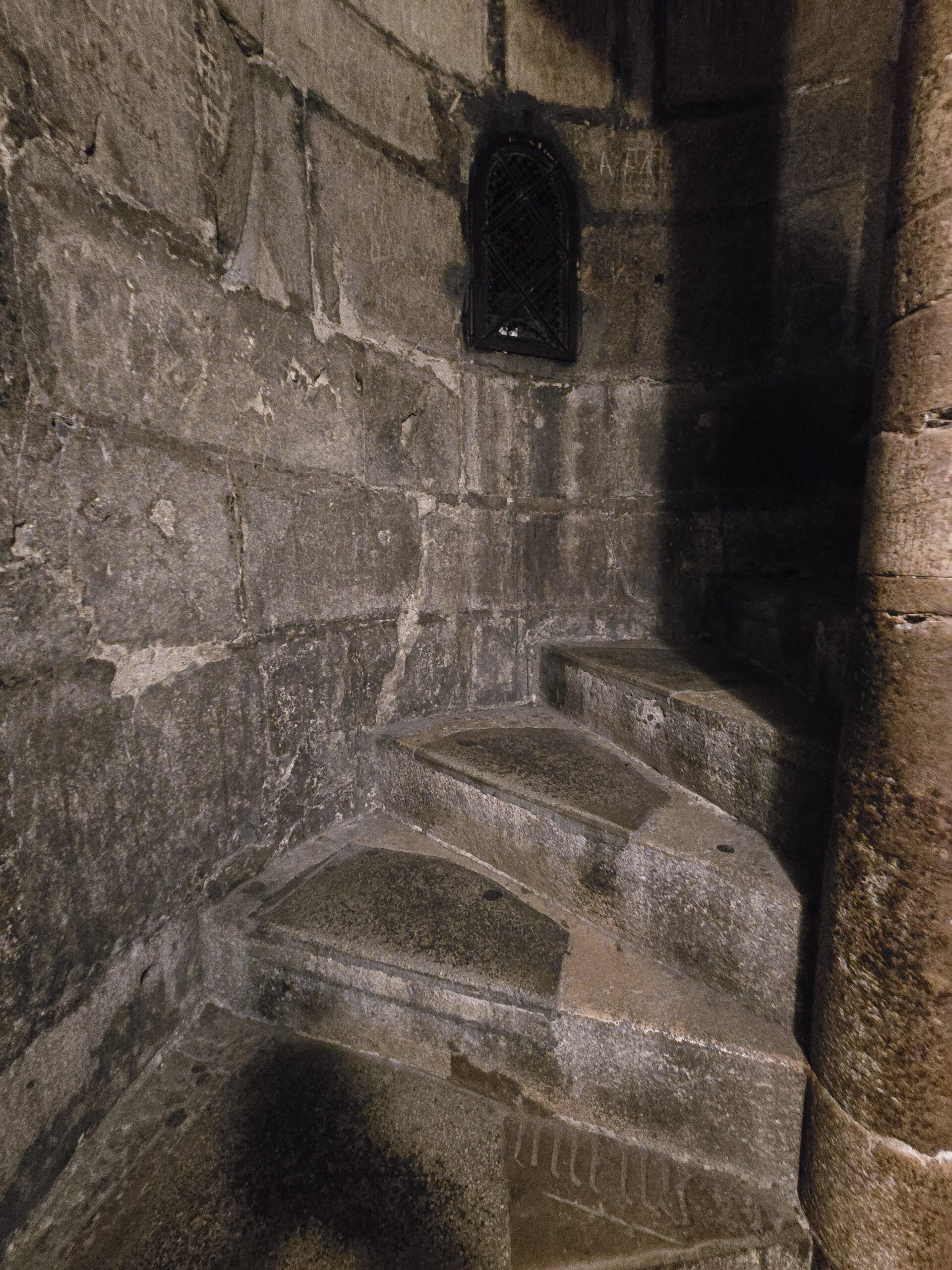
St. Stephen’s Cathedral has two towers: the North Tower and the South Tower. The North Tower stands 68.3 meters tall and offers a more leisurely experience as you ride an elevator to the top. Upon exiting the elevator, you step out to an open viewing platform where you can walk around and enjoy the breeze and views. The South Tower, the tallest of the church’s four towers at 136.44 meters tall, is reached by climbing 343 steps. I’m in relatively good shape, and that climb knocked the wind out of me! The spiral staircase is narrow and dim (just a few small windows along the way), and it can get rather warm. Adding to the challenge, guests go up and down at the same time, so you need to squeeze against the wall to let people pass. When you reach the top, there are several windows and a gift store (definitely an interesting location for one).
I don’t wish to discourage travelers from climbing the South Tower, but one must be very mindful of the conditions. It’s not an easy climb, and it can get very hot and claustrophobic. The North Tower provides equally great views.

The church is accessible, and the North Tower offers limited accessibility. The elevator is narrow, so not all wheelchairs may fit. The South Tower and crypt are not accessible.
Tickets purchased in person are cash only, as are items bought in the gift store.
My final recommendation is to visit this site first thing in the morning, especially if you intend to climb the South Tower. Temperatures are cooler earlier in the day, which will make the climb a bit more pleasant. Also, the church and towers won’t be as crowded as they are later in the day.
Travel Tips
Near St. Stephen’s Cathedral is the Hofburg Palace, home to the Imperial Treasury and the Imperial Apartments and the Sisi Museum. Each site typically requires 1.5 to 2 hours to explore, so they can easily be combined with St. Stephen’s Cathedral for a one-day itinerary.
Resources
For additional information, visit the official website of St. Stephen’s Cathedral.


Leave a Comment