
A guide to the Museo del Prado with tips on what to expect, how much time you’ll need, and how to navigate one of the world’s most famous art museums.
History
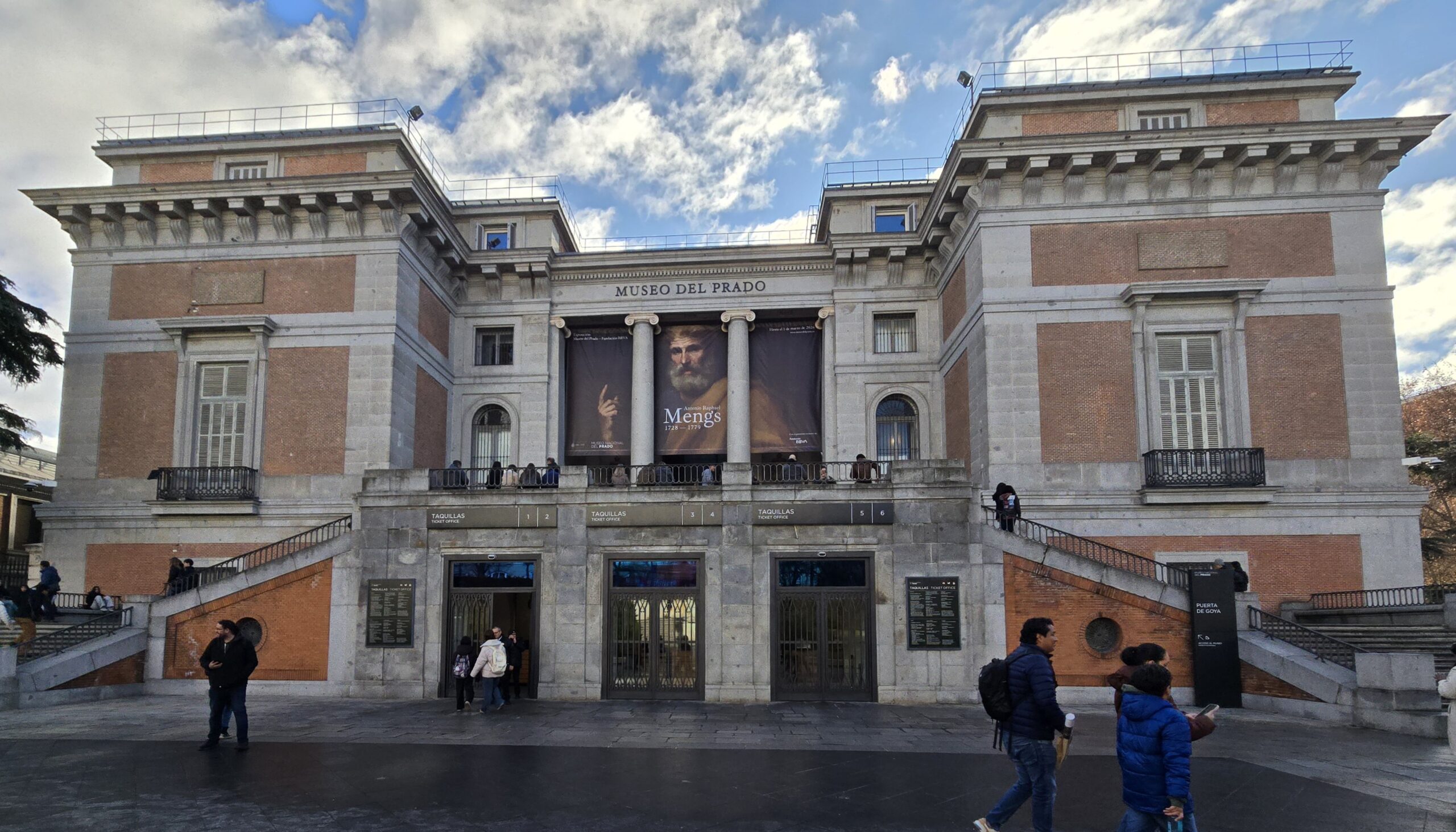
The building that houses the Museo del Prado was commissioned in the 18th century by Charles III of Spain and designed by architect Juan de Villanueva. It was originally intended to serve as the Natural History Cabinet rather than an art museum.
Decades later, under the influence of Queen Maria Isabel de Braganza, Ferdinand VII, the grandson of Charles III, repurposed the building as the Royal Museum of Paintings and Sculptures. The museum would later be renamed the National Museum of Paintings and Sculptures and eventually the Museo Nacional del Prado. It opened to the public in November 1819.
The collections visitors see today originated from the Spanish Royal Collections (Reales Sitios). These collections began to grow during the reign of Charles V in the 16th century and expanded significantly under the Habsburg and Bourbon dynasties.
Visiting the Museo del Prado in Madrid
The Museo del Prado has a no-photography policy, which is strictly enforced.
That is why this guide has no pictures other than the museum’s exterior.
Museo del Prado is no ordinary art museum. It is a legend often found on top-ten lists alongside the Louvre Museum and the Vatican Museums. With highlights like Diego Velázquez’s “Las Meninas”, Goya’s “Saturn Devouring His Son”, and the world’s largest collection of paintings by Peter Paul Rubens, it is easy to see why this museum attracts art aficionados and novices alike.
Given my passion for art, particularly Renaissance and Baroque paintings, the Museo del Prado was one of the places I was most excited to visit during my time in Madrid. This expansive museum houses an impressive collection of paintings and sculptures across more than 100 galleries and features the unique exhibit The Dauphin’s Treasure, a series of luxury items that pertained to the Grand Dauphin of France. I loved the paintings at the Museo del Prado, but I will admit that the exquisite, intricately carved treasures in that exhibit were a highlight of my visit.
Fellow travelers, since I can’t share interior photos, I’m listing a few highlights you can search for to get an idea of the types of paintings you’ll see during your visit. The Museo del Prado mainly features artwork from the Renaissance, Baroque, Rococo, and Neoclassical periods, spanning the 12th through the 20th centuries.
-
- Diego Velázquez – Las Meninas
- Hieronymus Bosch – The Garden of Earthly Delights
- Peter Paul Rubens – The Adoration of the Magi
- Raphael – The Holy Family (The Pearl)
- El Greco – The Nobleman with his Hand on his Chest
- Caravaggio – David with the Head of Goliath
- Francisco de Goya – The Third of May 1808
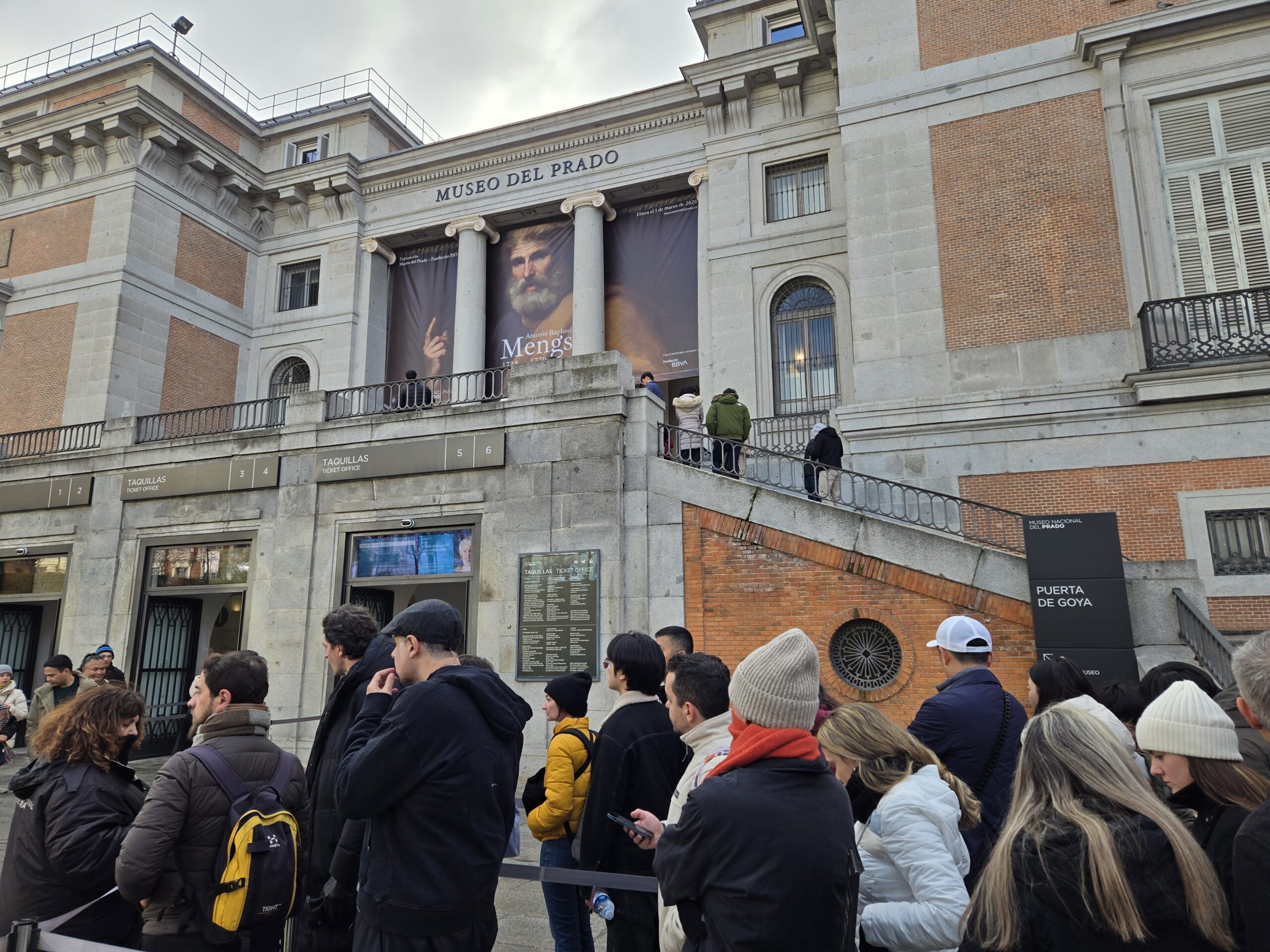
As one of Madrid’s top sites, Museo del Prado draws large crowds, and tickets can sell out quickly, particularly during peak travel seasons. My family’s visit to the museum was on the morning of December 24 (Christmas Eve), and fortunately, I purchased tickets in advance because the lines that day were quite long. For this trip, I bought the passes 6 weeks before our visit, and a few morning timeslots were already sold out. Compared to other museums, I found Museo del Prado’s ticket portal easy to navigate, and the process of buying tickets and renting an audio guide is straightforward.

Visitors who prefer to purchase tickets in person can do so at the museum’s Goya entrance.
How much time do you need to visit Museo del Prado? From experience, most visitors will need 60 to 90 minutes to view the highlights, while art enthusiasts can easily spend half a day or more. I spent about three hours at Museo del Prado and only left because the museum was closing (it has limited hours on December 24). Had the museum been operating on its regular schedule, I could have easily stayed another two or three hours.
To help plan your visit, Museo del Prado provides a few great sources on its website. The first is a detailed floor plan listing the must-see paintings on each level and the galleries where they are located. I found this helpful in making sure I didn’t miss the museum’s key highlights. There is also a series of itineraries based on available time (one- and two-hour itineraries) and interest, such as Reflections of the Cosmos or The Female Perspective.
If spending several hours at Museo del Prado, I recommend taking a break to enjoy a meal at Café Prado or a coffee and a sweet treat at the Ionian Gallery Tea Room. Between the sheer size of the museum and the crowds, you can easily start to feel overwhelmed, so a relaxing break can enhance your experience. I didn’t have time for a break during my visit and I was exhausted by the end.
For those interested in more in-depth information, audio guides and guided tours are available for an additional fee. The audio guides can be heard through a museum device or your smartphone. I rented audio guides for my family and found the museum’s devices easy to use and the information insightful. As for the guided tours, they are offered several times during the day and last approximately 90 minutes.
If you plan to use a smartphone for the audio guide, you must bring your own set of headphones.

The museum is fully accessible to those using mobility assistance equipment, and wheelchairs and baby strollers can be borrowed (available at the cloakroom).
Travel Tips
Museo del Prado is one of the three museums that comprise Madrid’s Golden Triangle of Art, along with the Museo Nacional Centro de Arte Reina Sofía and Museo Thyssen-Bornemisza. The museums are within walking distance of each other, and the Reina Sofia and the Museo Thyssen-Bornemisza are just as impressive as the Museo del Prado.
The Reina Sofía is home to Pablo Picasso’s Guernica.
Resources
For additional information, visit the Museo del Prado’s website.


Leave a Comment